

Automation Camera System
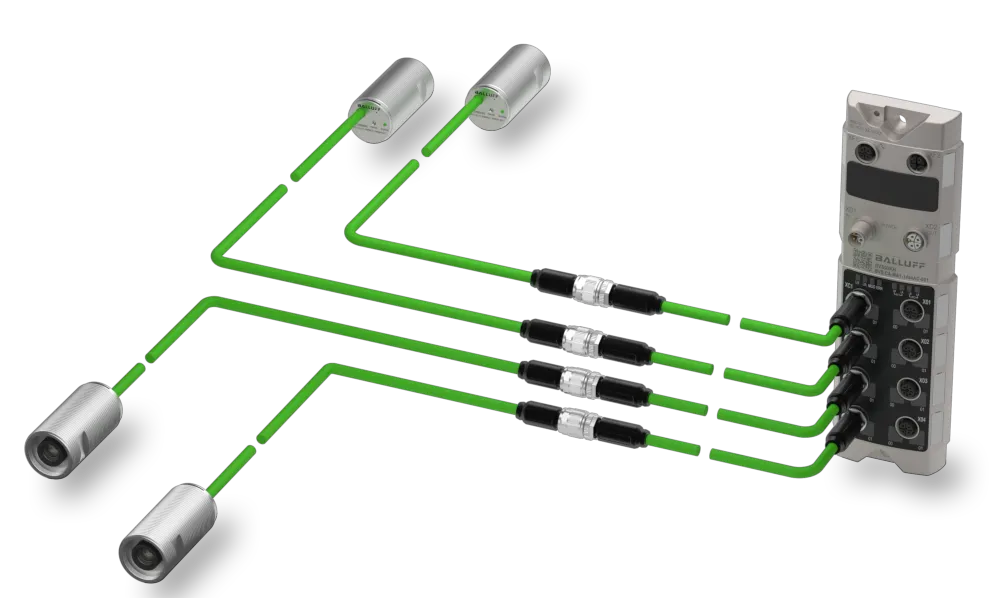
The Automation Camera System is a multi-camera solution for industrial automation that simplifies conventional multi-camera architectures and enables cost-effective implementation in machines, equipment, and production lines.
Compact M30 cameras with integrated optics are connected to a central Camera Master via cost-efficient industrial cables that transmit power, image data, control, and I/O communication.
Interested in the Automation Camera System?
Would you like to learn more or discuss your application with us? We'd be happy to assist you.Automation Camera System - Simple yet fully flexible
The Automation Camera System replaces traditional multi-camera setups with an integrated system solution. Instead of integrating cameras, cabling, and controllers as separate components, all elements are combined into one coordinated overall system. This significantly reduces integration effort and makes multi-camera applications much easier to implement.
At the same time, system complexity as well as engineering, installation, and service effort are reduced. The result is a scalable multi-camera solution that is easier to plan, implement, and operate—and that enables the cost-effective use of multiple cameras directly inside the machine.
Benefits of the Automation Camera System
By closely coordinating all system components, the Automation Camera System provides an integrated, industrial-grade approach for modern multi-camera applications. It turns multiple individual cameras into one integrated overall system that reduces complexity and significantly simplifies the implementation of multi-camera solutions.
Thanks to its scalable architecture, the system also offers a high degree of future-proofing for growing multi-camera applications and is already designed to be CRA-ready.

Lower costs

Smaller footprint

Less complexity

Less integration effort
System Overview
The Automation Camera System consists of three core building blocks specifically designed for seamless interaction. This minimizes integration effort and forms the basis for a compact, scalable multi-camera solution.
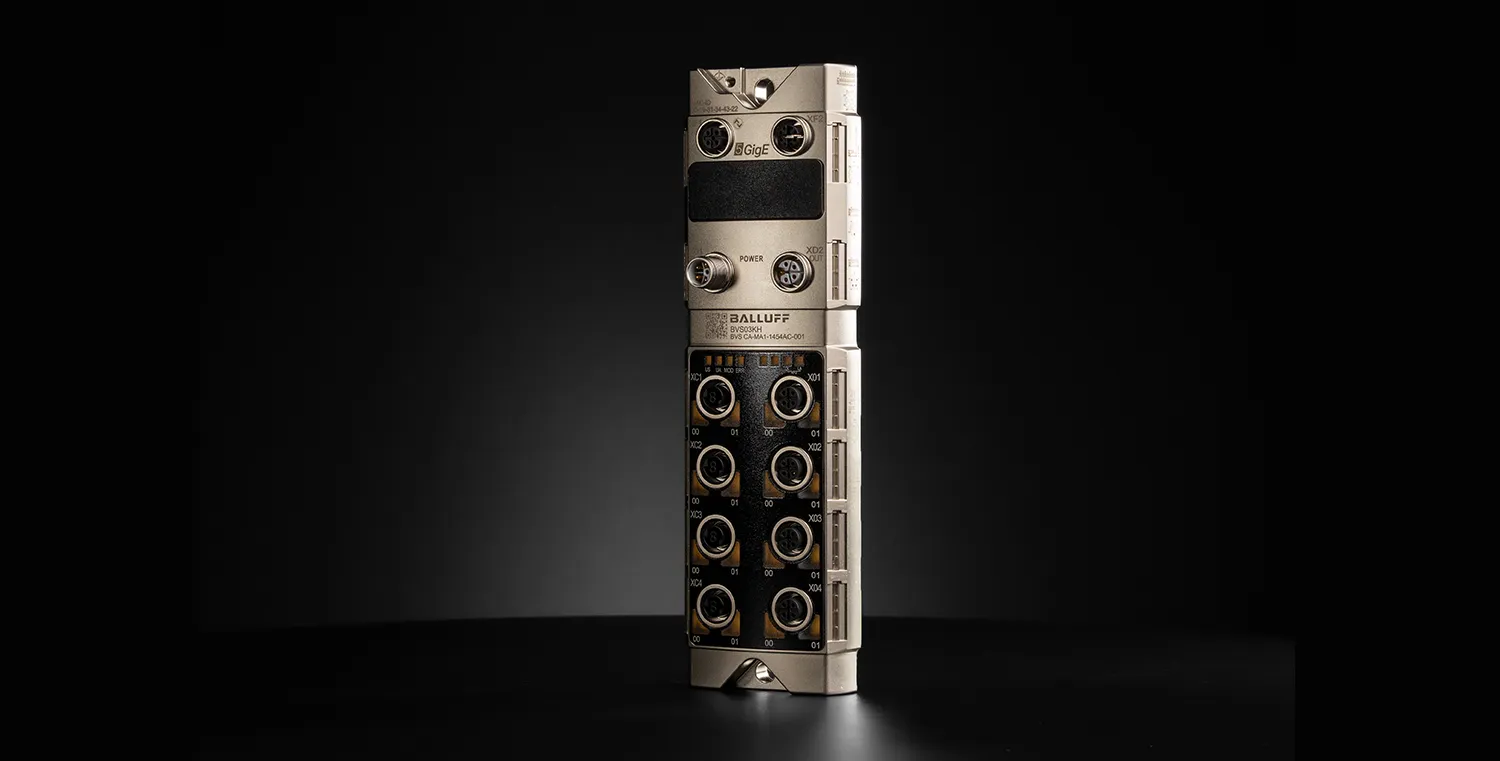
The Camera Master
A central Camera Master coordinates multiple cameras, aggregates image data, and provides connectivity to automation and IT systems. Standardized interfaces and 5 GigE Ethernet simplify integration into existing systems. The rugged Camera Master is designed for direct use inside the machine and enables commissioning, monitoring, and management through an integrated web server.
The cameras
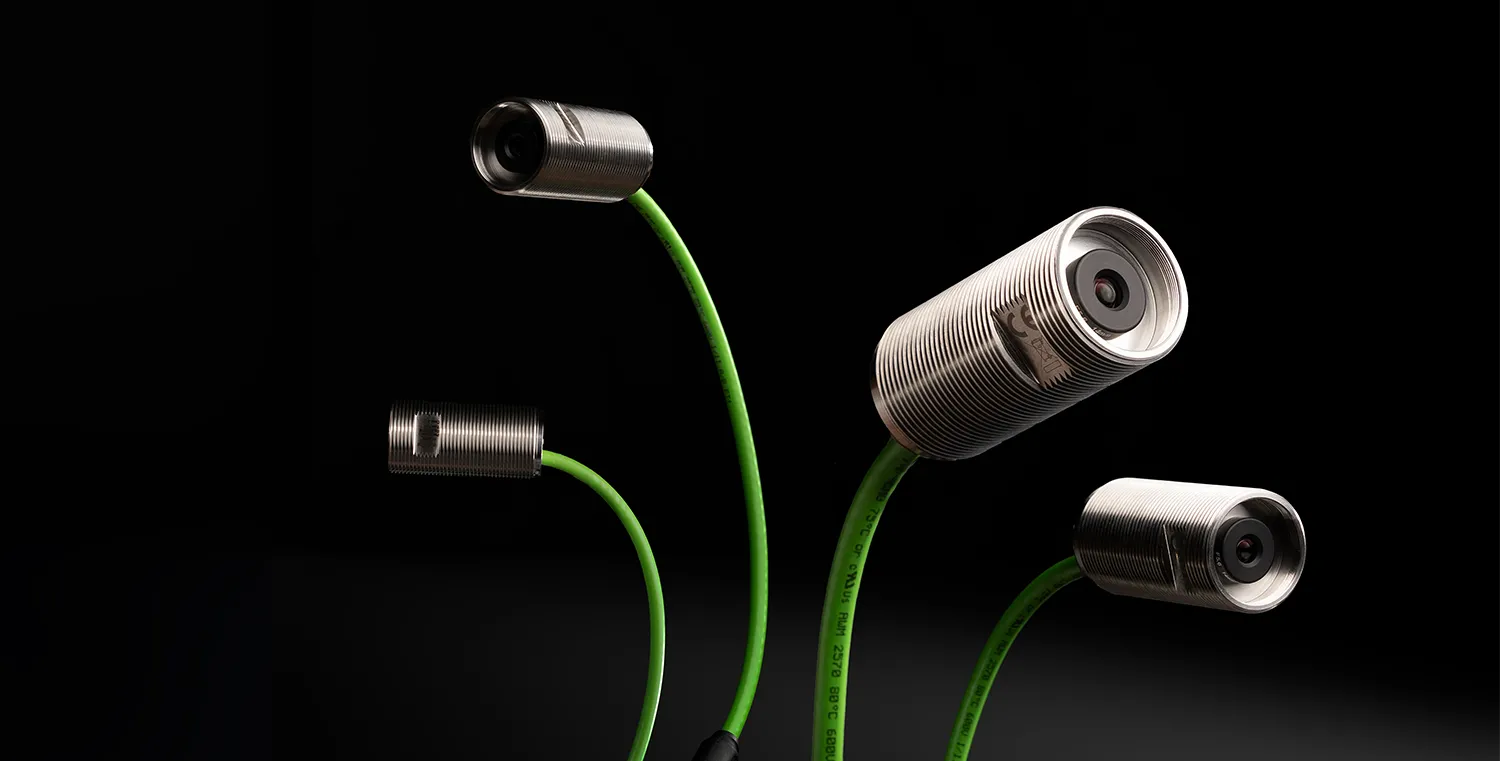
The compact cameras in the M30 form factor combine an image sensor and optics in a rugged IP67 housing. This allows them to be integrated directly into the machine like a sensor, requiring minimal installation space while reducing the effort needed to select, mount, and protect additional components.
Single-cable connection
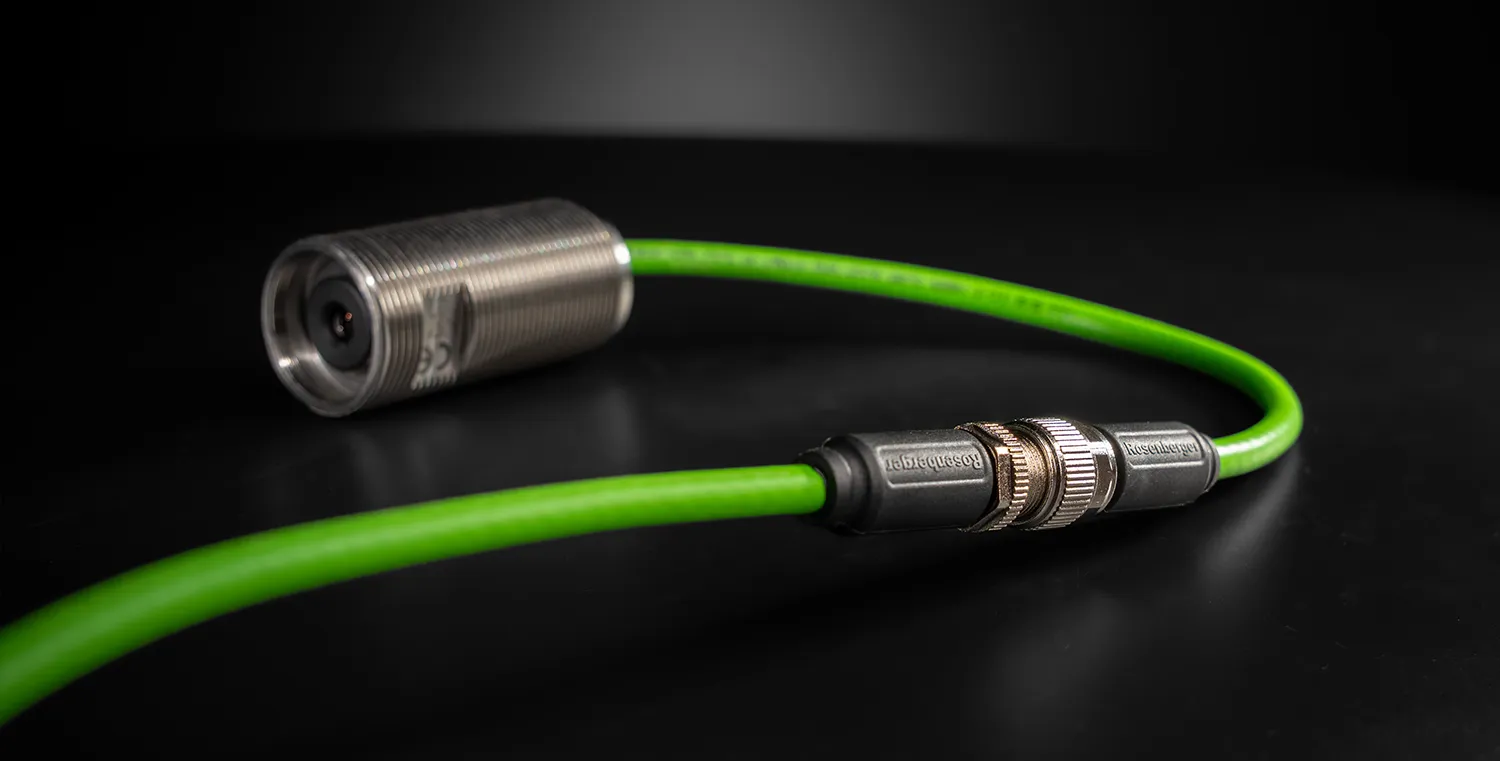
Power supply, control, and image data transmission are handled through a single connection. The single-cable architecture reduces cabling effort and installation costs while simplifying the integration of multiple cameras. Standardized cables with lengths of up to 15 m provide additional flexibility for machine layouts and system planning.
One System Architecture Instead of Many Individual Components
Multiple cameras are connected through a central Camera Master to create one consistent system. It coordinates the cameras, aggregates image data, and provides connectivity to automation, IT, and vision systems. Additional functions such as an integrated web server, monitoring, and standardized communication interfaces simplify commissioning, diagnostics, and system integration.
For reliable image acquisition, the cameras feature integrated image sensors and matched optics. This significantly reduces the effort required for selection, integration, and commissioning. The rugged single-cable architecture with industrial M12 connections enables direct integration into machines and systems and provides the foundation for a scalable multi-camera architecture.
In addition, the system architecture was developed with future cybersecurity requirements in mind. The system firmware and integrated web server functions support CRA-compliant environments and help protect configuration and image data from unauthorized access.
In Detail: The System Architecture of the Automation Camera System
Camera Master
5GigE Interface
Aggregates multiple cameras and image data streams
Interface to network, IT, and vision systems
Central access for configuration and monitoring
Cameras
M30 form factor (sensor-like design, 30 mm diameter)
IP67-rated protection
Integrated optics
Power supply and data transmission through a single cable
3 or 5 MP
Cabling and Communication
Camera to master via cables up to approximately 15 m
Master to IT/edge systems via 5 GigE Ethernet
Software and Accessories
Integration via SDK (Impact Acquire)
Camera- and image-processing-specific accessories, such as lighting, optical filters, protective glass, and adapters
Typical Applications for the Automation Camera System
The Automation Camera System is designed for industrial applications that require multiple camera perspectives while keeping integration simple and system complexity low. Its system-based approach is especially valuable wherever multiple cameras are needed but conventional multi-camera setups are too complex, costly, or time-consuming to implement.
-
Process and Production Monitoring
Visualization and monitoring of production processes inside machines and systems using multiple cameras distributed along the production process.
-
Multi-View Inspection
Simultaneous capture of multiple sides of an object with centrally coordinated processing for complete and reliable inspection.
-
Assembly and Completeness Inspection
Verification of multiple component positions or assembly steps in one integrated system without complex integration of individual components.
-
Code and Label Inspection
Reliable capture of codes and labels in different orientations using coordinated multi-camera systems.
-
Packaging and Logistics Applications
Inspection of larger objects or conveyor sections with multiple cameras and easy integration into existing systems.
-
Robot Vision and Automated Processes
Support for automation solutions that use multiple cameras for position detection or process monitoring.
-
Surface Inspection
Inspection of larger surfaces or complex geometries with multiple cameras while reducing overall system complexity.
Expertise and Consulting – How to Contact Us
Our team of experts is here to offer you advice and assistance. If you're unsure which camera best suits your needs, we'd be happy to help.FAQs
-
How does ACS simplify installation?
The single-cable concept, compact cameras with integrated optics, and standardized components make installation significantly easier and enable direct integration into the machine.
-
How does ACS reduce system complexity?
ACS reduces the number of components and replaces multiple separate vision units with one integrated system. This makes cabling, integration, and operation significantly easier.
-
Can ACS reduce system costs?
Yes. By reducing hardware, simplifying integration, and lowering engineering and service effort, ACS can significantly reduce total system costs and total cost of ownership.
-
How flexible is the system for different applications?
The system has a modular, scalable architecture and supports the use of multiple cameras for different applications without a disproportionate increase in system complexity.
-
Is the system future-ready with CRA?
The Automation Camera System is designed for future requirements and supports CRA-compliant environments under the Cyber Resilience Act. This helps meet modern requirements for security, integration, and long-term scalability.