

GSDML and ESI files: invisible keys for efficient industrial automation
The basis for smooth device integration in modern control architectures
Reading Time: minutes
GSDML and ESI files: Why they are indispensable in industrial automation
In modern production plants, a wide variety of sensors, actuators and control components come together, often in complex networks and with high demands on speed, reliability and transparency. For maintenance engineers, control system developers and commissioning engineers, the same practical question arises again and again: How can this variety of devices be integrated cleanly into the respective control architecture without endless parameterization work or time-consuming troubleshooting?
The answer lies in two inconspicuous but crucial elements: the GSDML and ESI files.
GSDML: The digital identity of a PROFINET device
In PROFINET environments, the GSDML file acts as a complete description of a device. The files are in XML format and follow the internationally recognized schema according to ISO 15745, so they are not just lists of data, but comprehensive digital models that define how a device communicates, what parameters it requires and what diagnostic information it can provide. They contain the entire structure of a PROFINET device, its identification, the organization of the process data and all permissible parameters. Thanks to this completeness, the controller knows exactly how to talk to the device - from the first start to subsequent operation. The result is clear, deterministic communication that allows devices to be replaced or systems to be put back into operation quickly after shutdowns.
This means enormous simplification for technicians in the field. As soon as the appropriate GSDML file is integrated, the control system recognizes the device without a doubt and can initialize it automatically with the correct settings. Especially in service cases, where time and clarity are crucial, this principle is a real productivity gain.
ESI files: The basis for smooth EtherCAT communication
While GSDML files are indispensable in the PROFINET environment, ESI files ("EtherCAT Slave Information") play the same role in EtherCAT systems. These are also XML files that define exactly how a slave is structured, which process data it supplies, how it is configured and which functions it provides. EtherCAT masters use this information to integrate devices without errors - without manual reworking or trial and error. This is particularly valuable for developers and commissioning engineers, as the file ensures that a device is addressed exactly as the manufacturer intended.
ESI files ensure that the entire data and parameter exchange remains reproducible. This means that devices can be efficiently integrated, replaced or expanded even in widely branched or highly dynamic EtherCAT networks. The user only has to ensure that the correct revision is used - the rest is clearly defined in the ESI document.
Why these files are so important for planning, service and commissioning
GSDML and ESI files form the foundation for a consistent, reliable engineering process. They make it possible to plan systems precisely even before the first physical installation, make commissioning much easier and safeguard ongoing operation in the long term. Their value is particularly evident where time pressure, complexity and availability requirements come together.
The most important reasons can be clearly summarized:
Structured and complete offline planning:Devices can be precisely mapped and integrated into the planned topology long before hardware is available.
Faster and error-free commissioning:The controller clearly recognizes all devices and automatically adopts their parameters - without manual reworking.
Reproducible configurations:Once settings have been defined, they remain consistent and traceable over the entire service life of the system.
Reliable operation of your system:GSDML and ESI files ensure smooth communication between the controller and the devices during operation.
Efficient service in the event of a fault:When replacing a device, it is often sufficient to insert the new module; the control system configures it independently using the stored file.
Clear diagnostic capability:Standardized descriptions make it possible to identify fault patterns more quickly and rectify them in a targeted manner.
GSDML and ESI files are therefore far more than just technical formalities. They create a stable basis on which planning, commissioning and subsequent service can be carried out efficiently, reproducibly and reliably, even with dynamic system structures and high availability requirements.
How modern engineering tools are revolutionizing the handling of GSDML and ESI files
However, practice shows that dealing with these files is not always trivial. Users must ensure that they use the correct versions, transfer all relevant parameters correctly and document changes to the topology properly. This often means using different tools, manual intermediate steps and potential sources of error.
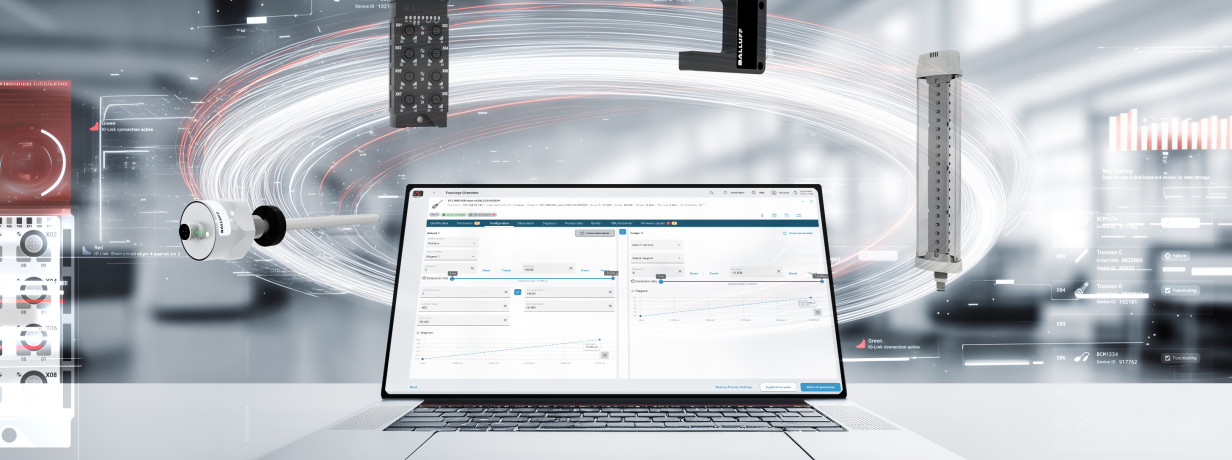
This is exactly where theBalluff Engineering Toolcomes into play. It not only enables the complete planning of IO-Link topologies in offline mode, but can also directly generate the appropriate GSDML and ESI files. This means that all previously defined parameters, device information and topology structures are automatically transferred to a configuration file that can be imported into PROFINET or EtherCAT controllers without further programming. The controller then automatically takes over the parameterization of all connected devices. This reduces complexity and minimizes sources of error. However, anyone who wants to adjust parameters afterwards can also do so very easily: IO-Link device description files - so-called IODDs - can also be transferred to the GSDML and ESI files afterwards.
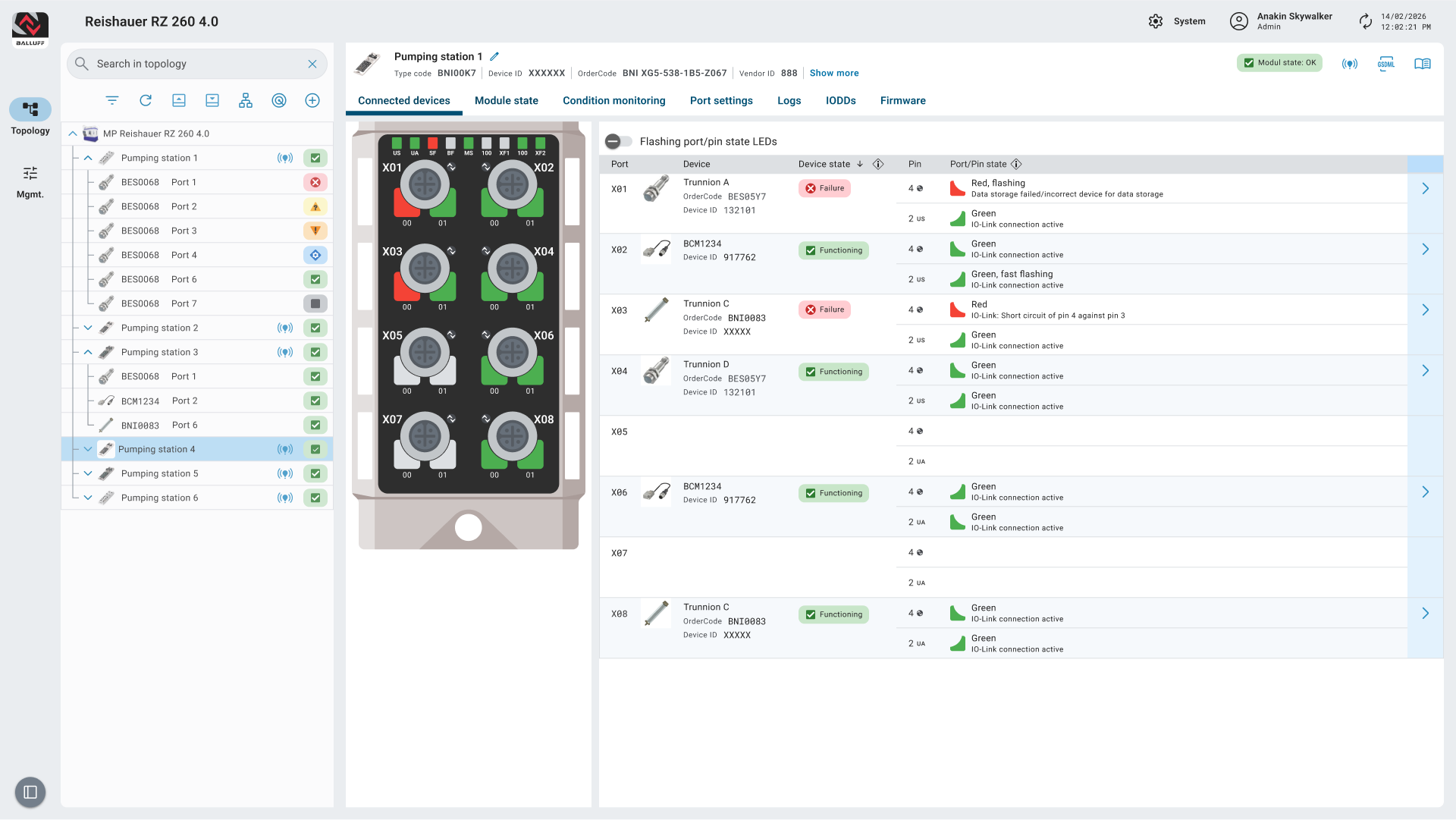
This has a particularly pleasant effect for maintenance and service personnel: if a device is replaced, the new one is automatically configured using the stored file, without any additional settings or manual intervention. The tool also creates a clearly structured and efficient process when setting up new systems thanks to functions such as the topology check or central parameterization. It thus combines the theory of GSDML and ESI files with the practical reality of industrial automation and turns a potential source of error into an automated, reliable process step.
Conclusion
GSDML and ESI files play a central role in the reliable integration of devices in modern automation networks. They define how components are identified, configured and operated, thus creating a stable basis for planning, commissioning and service. With a tool such as the free Balluff Engineering Tool, these advantages can be seamlessly transferred to everyday practice.
Watch now our Balluff Engineering Tool Webniar:
Comment
Popular posts
An easy way to remember PNP and NPN sensor wiring
The evolution of inductive sensor technology
Choosing the right code reader: Laser versus vision
Balluff's Long Distance Positioning System (LDPS): An ultimate in reliability and flexibility
Contact form
Do you have any questions or suggestions? We are at your disposal.
Balluff Benelux
-
Hintham 117d
5246 AE Rosmalen, Netherlands