

Enhancing Packaging Traceability with RFID and Optical Codes
How RFID and optical identification improve packaging performance
Reading Time: minutes
Traceability helps packaging manufacturers detect errors earlier and reduce waste, downtime and complaints.
Optical codes are cost-effective and widely used for product and label identification.
RFID enables automatic identification without line of sight and is especially useful for tools, change parts and harsh environments.
The strongest traceability concepts combine RFID and optical identification instead of treating them as competing technologies.
Connected traceability data supports faster troubleshooting, more reliable startups and higher OEE.
Why is traceability becoming essential in packaging?
Traceability is no longer only a compliance requirement in packaging. It has become a practical way to protect product quality, reduce waste and keep machines running reliably. In high-speed packaging environments, even small errors such as incorrect labels, wrong product formats or missing components can quickly lead to scrap, downtime and customer complaints.
To avoid these issues, manufacturers need real-time visibility of products, tools and process steps across the packaging line. Traceability creates this visibility by linking physical identification with process data. This makes it easier to understand what happened, where it happened and which corrective action is needed.
For industries such as food, beverage, pharmaceuticals and consumer goods, reliable traceability is especially important because quality expectations, documentation requirements and production complexity continue to increase.
Full transparency from filling to end-of-line inspection
Faster root-cause analysis in case of defects
More consistent product quality and compliance support
What is the difference between RFID and optical identification?
Modern packaging traceability is typically built on two identification technologies: optical codes and RFID. Both support reliable identification, but they work in different ways and are suited to different process points. The best traceability architecture usually combines both technologies rather than selecting only one.
Optical codes: cost-effective product and label identification
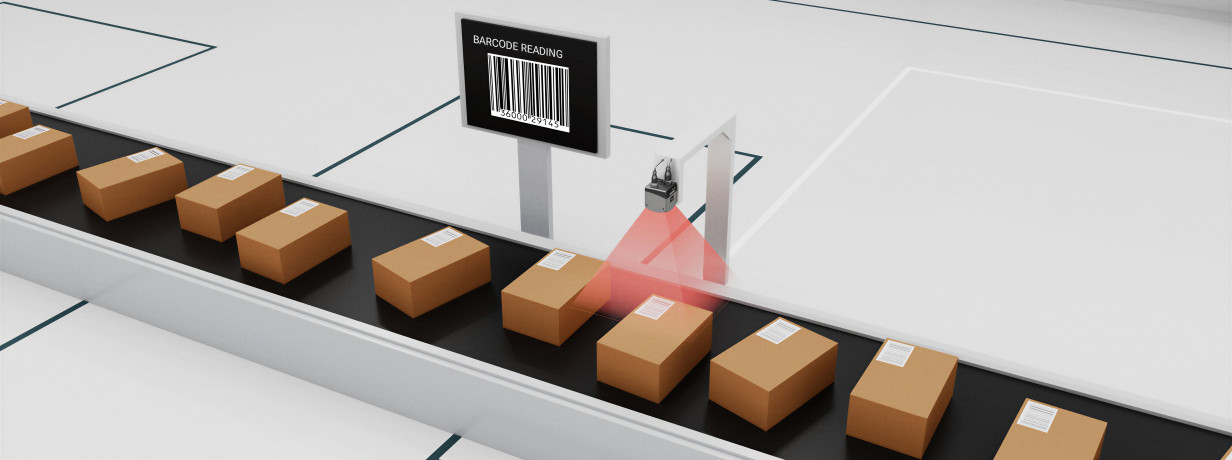
Optical identification uses printed or directly marked codes, such as 1D barcodes, 2D codes or Data Matrix codes, which are read by cameras or barcode readers. Because these codes fit naturally into labeling and packaging processes, optical identification remains the standard choice for many high-volume applications.
Cost-effective and widely available
Easy to integrate into labeling processes
Suitable for high-volume packaging applications
The main limitation is that optical systems require line of sight. Code readability can also be affected by dirt, damage, reflections, label position or code quality. In very fast processes, manual or poorly positioned scanning steps can become a source of delays or missed reads.

RFID: automatic identification without line of sight
RFID identifies objects using radio waves. RFID tags do not need to be visible and can be read automatically, even when the object is moving. They can also store more data than many optical codes, which makes them valuable when identification must include additional information such as status, process parameters or product history.
This makes RFID especially useful in applications where robustness and process reliability are critical, for example tool identification, format change verification, reusable carriers or harsh production environments.
No line of sight required for faster identification
Automatic reading in motion
Higher data capacity for status, parameters or product history
Robust performance in demanding environments
Read-only or read/write options depending on the application
RFID usually requires a higher initial investment than simple printed codes and must be considered early in the machine design. Antenna position, tag type, reading range and environmental conditions all influence the final system concept.
RFID or optical codes - which technology should you use?
Use optical codes when labels are already part of the packaging process, low implementation costs are critical and line-of-sight scanning is available.
Use RFID when automatic verification is required, tools or change parts need reliable identification, harsh conditions affect label readability or process reliability is critical.
Best practice: combine RFID and optical identification to create reliable identification at every stage of the packaging process.
Which traceability challenges cause downtime in packaging lines?
Traceability problems in packaging are often not caused by a single technology failure. They usually occur when identification is inconsistent, validation is missing or manual checks are still part of critical setup steps. These weaknesses become especially visible during product changeovers, tool changes and machine startup.
Incorrect installation of tools or change parts
Missing, damaged or unreadable labels
No real-time verification during setup
Manual checks that slow down production
Inconsistent product identification across the line
The consequences are direct and measurable in daily operations: setup errors, collisions, unstable startup behavior, waste, rework and time delays. A strong traceability concept helps prevent these issues by verifying products, machine components and process states before they create downstream problems.
FAQ:
How can packaging OEMs improve traceability?
Reliable traceability requires more than adding a sensor, camera or code reader at the end of the line. Identification should be part of the machine concept from the beginning and should connect physical objects with the digital data needed for control, verification and quality documentation.
1. Place identification at the right process points
Traceability should be integrated into the process steps where errors can occur or where decisions are made. In packaging, this typically includes filling, labeling, cartoning, format change areas and end-of-line inspection. Identification added too late can document an error, but it may not prevent it.
2. Replace manual checks with automated verification
Manual verification introduces delays and creates variation between shifts, operators and production runs. Automated identification can verify products, tools and change parts faster and more consistently, helping machines start more reliably after changeovers.
3. Link physical products with digital process data
Traceability becomes most valuable when identification data is connected with process parameters and quality information. This creates transparency across the packaging line and supports faster troubleshooting when defects, rejects or complaints occur.
How does Balluff support packaging traceability?
Balluff supports packaging OEMs with an identification portfolio that combines RFID systems, optical identification and industrial network technology. This enables machine builders to create scalable traceability concepts for products, tools, change parts and connected machine data.
Key Takeaway
Traceability is a key driver of packaging quality and operational performance.
Optical codes provide cost-effective product identification and label verification.
RFID enables automatic identification without line of sight and improves process reliability.
The strongest traceability concepts combine RFID, optical identification and connected data architecture.
Better traceability reduces waste, setup errors, rework and unplanned downtime.
Comment
Popular posts
The industrial revolution - from the steam engine to Industry 4.0
Sensors for Detecting Transparent Media
IO-Link vs. IO-Link Wireless: Enhancing Flexibility and Efficiency in Automation
Advantages of inductive proximity sensors in industry
Contact form
Do you have any questions or suggestions? We are at your disposal.
Balluff ApS
-
Niels Jernes Vej 10
9220 Aalborg Øst