

Why Networked Safety Is Replacing Hardwired Safety in Modern Automation
Enhancing safety in the modern plant floor
Reading Time: minutes
For decades, hardwired safety systems have been the foundation of industrial machine safety. They are proven, reliable, and familiar. But as manufacturing environments become more connected, modular, and flexible, hardwired safety is increasingly showing its limits.
Networked safety takes a different approach. Instead of relying on point-to-point wiring and safety relays, safety devices communicate over certified industrial networks using protocols such as PROFIsafe, CIP Safety, or Safety over EtherCAT. This shift allows safety to scale and adapt alongside modern automation systems.
What’s Driving the Shift
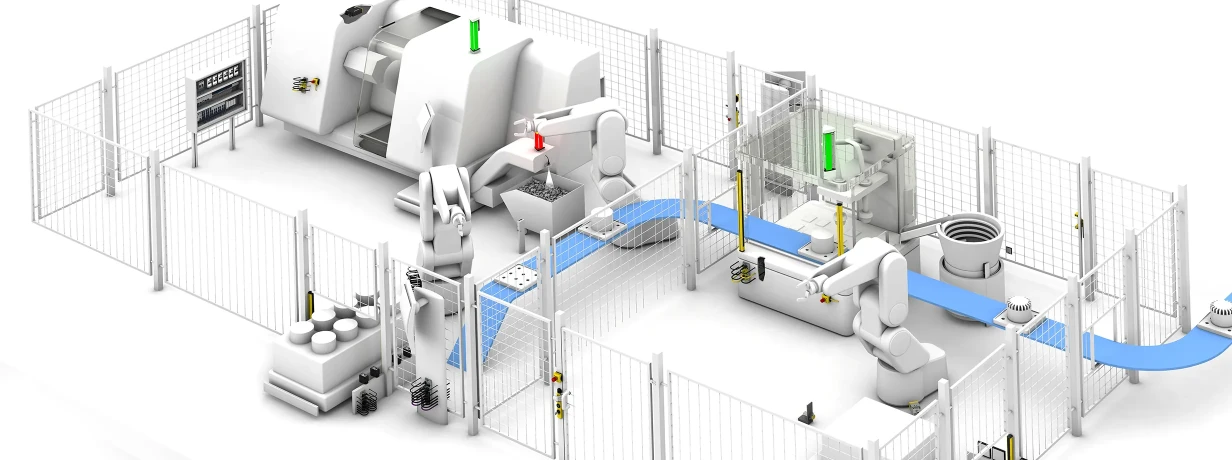
One of the biggest drivers is complexity. As machines grow more advanced, hardwired safety quickly leads to crowded control panels, longer installation times, and difficult troubleshooting. Networked safety reduces wiring by transmitting safety data digitally, often over the same physical infrastructure used for standard control data.
Flexibility is another key factor. Modern factories frequently reconfigure production lines, add robots, or introduce new safety zones. With networked safety, many of these changes can be handled in software rather than physical rewiring—saving time, cost, and downtime.
More Than Just Safety Stops
Networked safety systems also provide richer diagnostics. Instead of a simple stop signal, operators gain visibility into which device caused the shutdown and why. This enables faster troubleshooting and supports more proactive maintenance strategies.
A Brief Look Ahead
As safety systems continue to evolve, the next step is bringing safety closer to the device level. Technologies like IO-Link Safety are beginning to extend the benefits of networked safety down to sensors and actuators, creating even more flexible and scalable architectures.
The Takeaway
Networked safety is not simply a new way to wire machines—it is a better fit for how modern manufacturing operates. By reducing complexity, improving flexibility, and enabling smarter diagnostics, it is becoming the preferred foundation for safe, connected automation.
Keywords
- Industrial network technology
- IO-Link
- Efficient production
- Industry 4.0
- Safety
- Robotik
- Industrielle Automatisierung
- Trends in der Technologie
- Connectivity
- IoT
Author

Shishir Rege
Shishir Rege is a strategic leader with over 25 years of experience in industrial automation. He specializes in aligning technology with business goals to drive productivity and operational excellence. Shishir has a proven track record of implementing Smart Manufacturing and automation solutions across the automotive, aerospace, medical, and consumer goods sectors. He holds an MS in Electrical Engineering and an MBA, and frequently contributes to industry publications and conferences.
0 Contributions