

Die Protection 101: Protect Sensors and Stamping Dies
How to improve part-presence detection before material enters the die
Reading Time: minutes
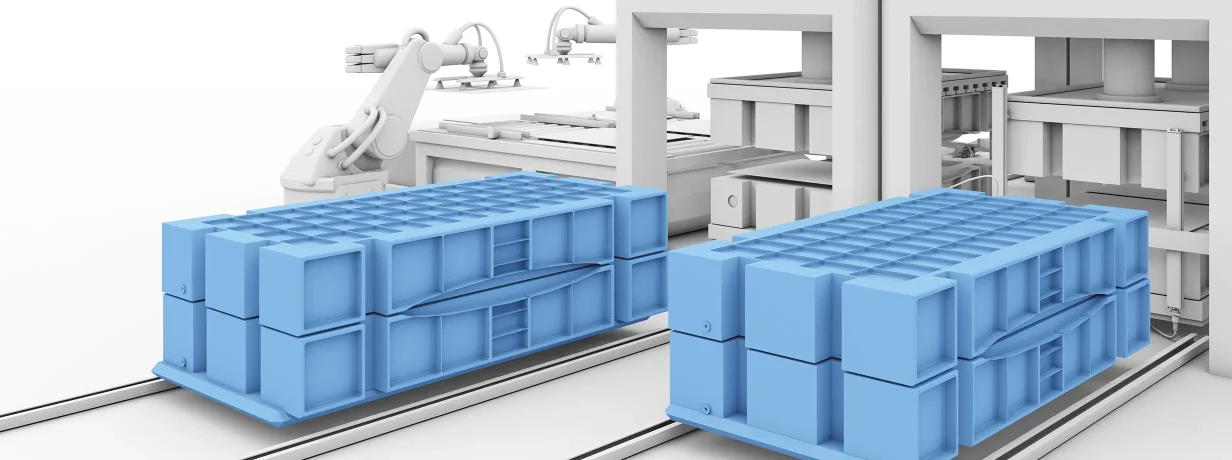
Complex environments in the automotive industry are everywhere. And stamping procedures highlight among those where common sensor instrumentation trends to last the least.
As stamping procedures are not so easy to refurbish (typically, once installed, is able to endure at least 25-30 years of non-stop production procedures) legacy components are primarly installed, which leaves us with one question: What portfolio do I have available?
As the metal forming procedure that is, the primary technologies for a standard stamping process (idependent of the type of press and process) are inductive sensors most commonly on part detection, tool & die detections, grippers and feeders. And photoelectric sensors for various types of applications (roll diameter. Part present, alignment, part feed and outputs).
It is important to make proper selection of the families involved, as using adequate robust sensors will typically allow for longer MTBF, but it is common to fall under the misconseption that a robust sensor will be process proof or stamp-proof.
Die protection is a philosophy sustained on the PDCA continous improvement cycle. Where we look for the root causes for instrumenting downtime, be detection failures, component damages and risk to production (such as clogged scrap tunnels, damaged cutting tools, punch tools and transfer systems.
As stamping is a large discussion topic, we will focus on this article on just the part presence detection, we will leave the Die operation instrumenting and the press instrumenting for subsequent entries.
Blanket related applications
The product is the star! But on a process that applies forces on ranges of 20ton for small brackets to up to 5000 tons on large bodies adjustment and sensors must be precise and prepared.
Starting on the feeder, one of the most common applications is the roll width detection. Ensuring the availability of product and providing feedback onto the righteous moment to do a roll change. Go for a long distance photoelectric sensor, preferrably with IO-link, as it will simplify the incorporation onto control. If legacy systems are only available, an Iolink configurable device allows to set up digital outputs onto critical limits in order to provide digital feedback understandable by old systems as well.
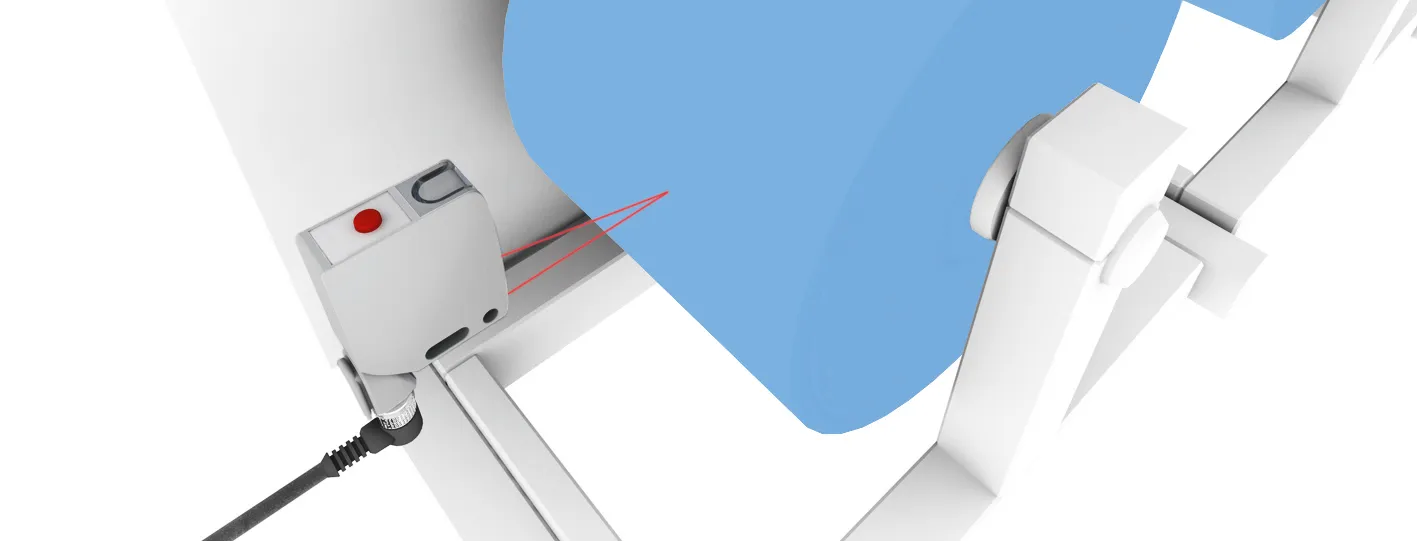 Roll width through Photoelectric IO-link distance sensors
There are preshape blanket feeders as well! And it is quite common to have it slide an additional sleeve into process.
Stamping dies are precision tools, and the amount of force is determined taking the width of the blanket into consideration. Having double the width can result in tool destruction or irreparable damage to either the die or the press, a risk we cannot take!
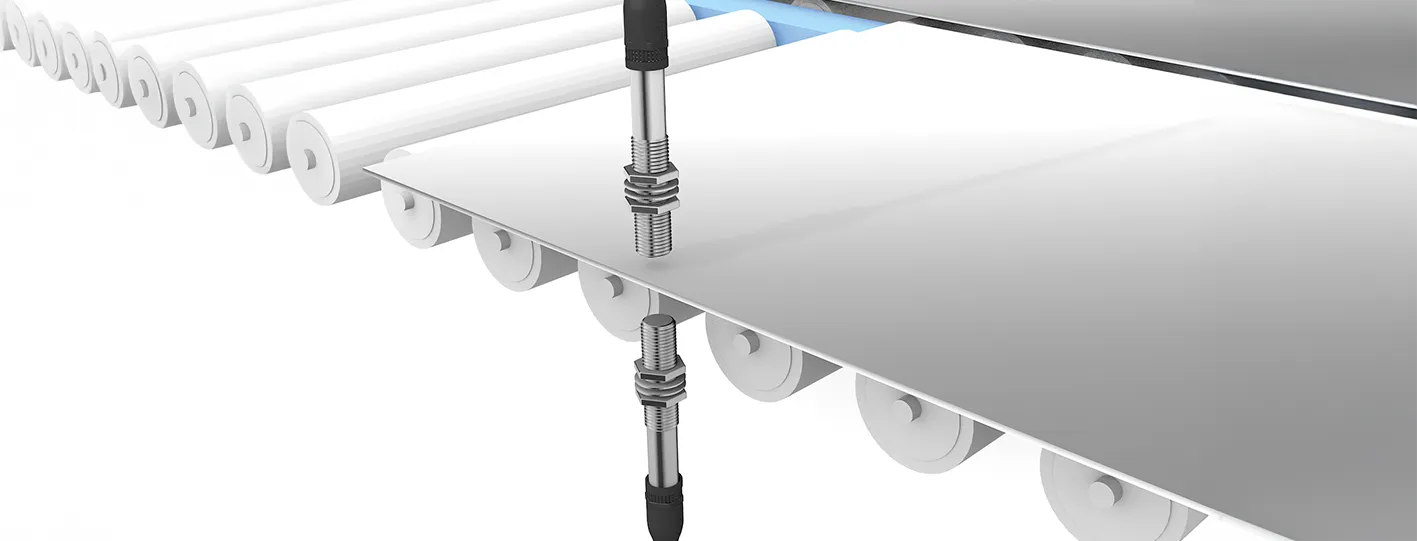 Sheet metal thickness and double blanket through Inductive IO-link sensors
Inductive IO-link sensors allow for precise detection on a small range. This means micron-capable detection! Using 2 opposed faced sensors will let you know the differential and in so, the presence of a double sheet or a material out of spec!
To ensure the alignment on your blanket and metal sheets, a combination of encoders and IO-link light barriers can provide you with the tolerance adjustment, be mindful that a misalignment may result on poor quality stamping or even stamping without blanket, which can result on damage on the die and matrix!
Sensors are by definition a contactless device, which means all of the adjustments for sensing range and mounts must be done in accordance, this to ensure the integrity of the device and also to ensure the user onto the features the product has to offer. Granted, there will be times in which collisions may be unavoidable, but that is an area where a different technology may be better suited or a chance for a full kaizen depending on the frequency of damage and the impact on the production time.
There are times when sensors alone cannot ensure the reliability and integrity of the operation, and that’s where protection accessories come in handy! Indirect detection methods such as plunger probes, caps and side taps save the day!
Keywords
- IO-Link
- Sensor technology
- Industrielle Automatisierung
- Intelligente Sensorik
- Inductive sensors
- Condition Monitoring
- distance measurement
- Efficient production
Author

Fernando Reyes
Fernando Reyes is a mechatronics engineer with more than 13 years of experience in industrial automation across Mexico, Brazil, Canada, and the United States. As a Key Account Manager at Balluff, he helps manufacturers apply industrial networking, IO-Link, condition monitoring, and smart-manufacturing technologies to practical production challenges.
0 Contributions