

Moving Power to the Machine: A Smarter Way to Cut Wiring Time and Cost
How decentralized power supply design helps machine builders reduce wiring labor, unlock flexibility, and shorten commissioning time.
Reading Time: minutes
IP67 vs. IP20 Power Supplies: The Real Impact on Wiring Cost and Labor in Automotive Machine Builds
In automotive manufacturing, time and wiring are money. Every extra cable run, enclosure hole, or terminal connection adds labor hours and potential failure points. As machine builders continue to chase faster integration and more modular designs, the choice between IP67 and IP20 power supplies has become less about environmental protection—and more about efficiency and cost structure across the entire build.
The Traditional Approach: IP20 Power Supplies in Control Cabinets
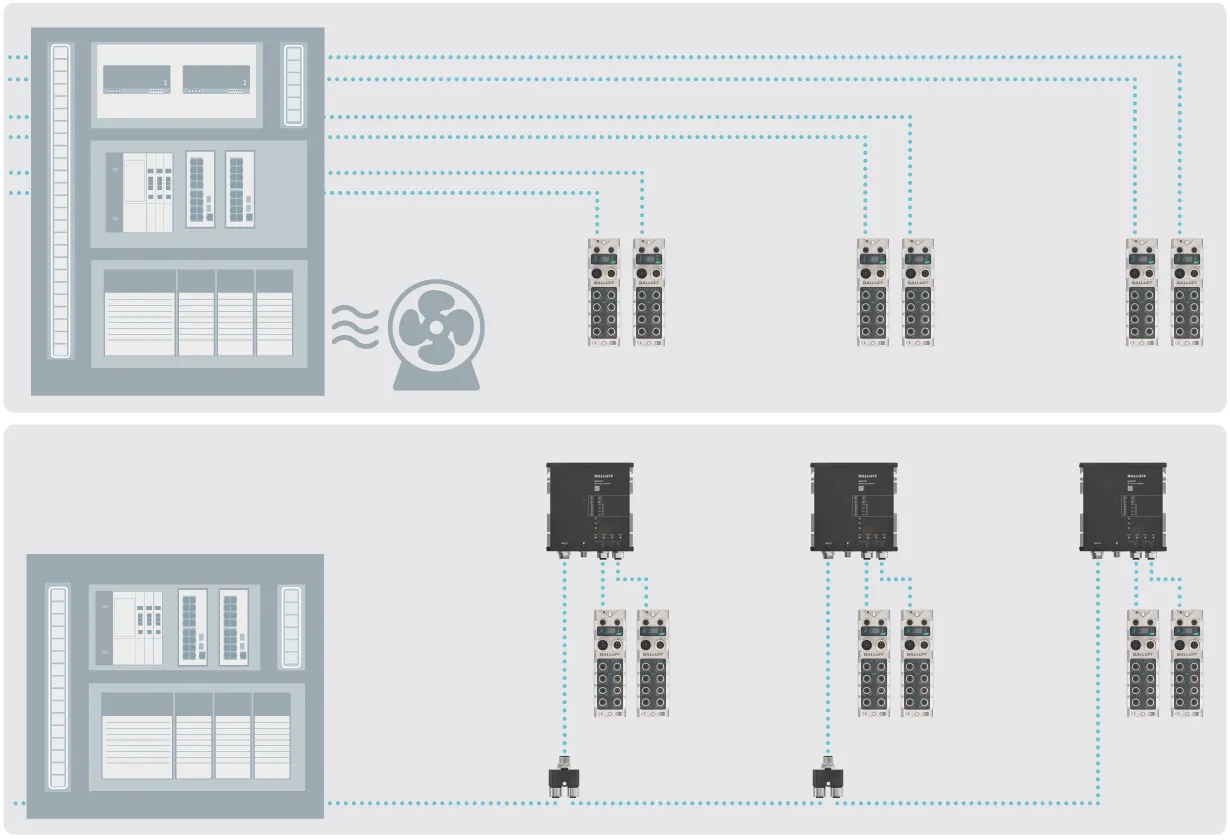
Most legacy machines still rely on centralized IP20 power supplies mounted inside electrical cabinets. From a design standpoint, this setup feels familiar—everything is neat, protected, and easy to service. However, as machines grow larger and more complex, the hidden costs begin to surface.
Wiring Distance and Material Costs:
With an IP20 cabinet-based approach, power must be distributed across the entire machine. That means long cable runs to each sensor, actuator, or I/O block. Over the course of a single production line, that can translate into hundreds of feet of additional wire, conduit, and connectors—all of which drive up material cost.
Installation Labor:
Every one of those cable runs has to be measured, cut, routed through wire trays, labeled, and landed on terminals. It’s detailed, time-consuming work. Even a small cell can require several days of wiring labor before commissioning begins.
Change Management:
If the design changes mid-build (which is almost inevitable), electricians must reroute or add wiring back to the main cabinet. This rework compounds labor time and can disrupt the tight build schedules automotive projects demand.
The result? Centralized power remains clean and conventional, but it can quietly consume significant labor hours and material budget—especially when machine footprints are large.
The Decentralized Alternative: IP67 Power Supplies on the Machine
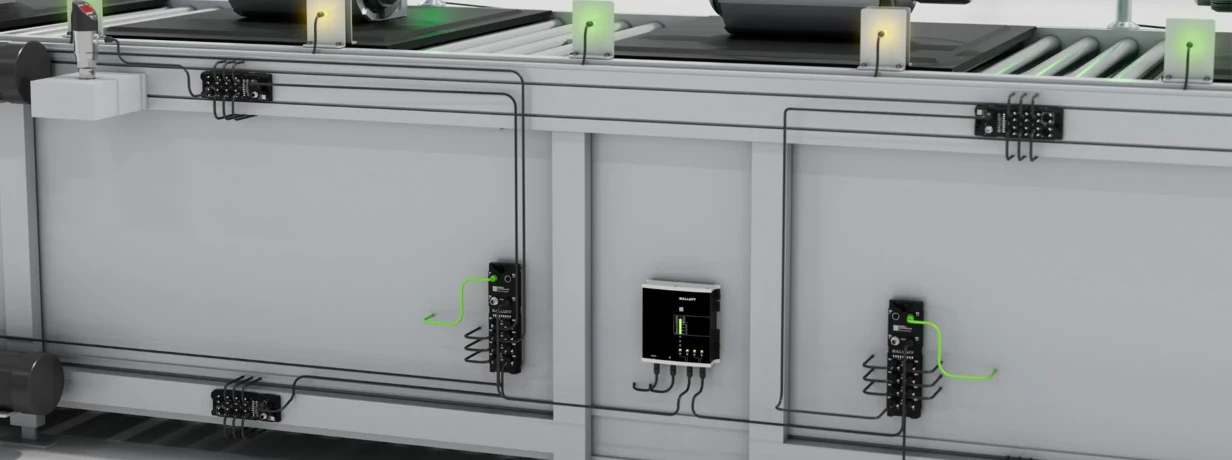
The rise of IP67-rated power supplies allows power distribution to move out of the cabinet and directly onto the machine. For many automotive builders, this shift represents a major opportunity to simplify wiring architecture and reduce build time.
Shorter Wiring Runs:
By mounting IP67 power supplies closer to the load—on a machine frame or near a robot cell—you eliminate the need to pull power all the way from a remote cabinet. This drastically cuts wire length, saving not only material cost but also the time needed to install and label those runs.
Faster Installation:
Decentralized systems often use quick-connect M12 or M23 style connections instead of hardwired terminals. Plug-and-play installation can reduce wiring labor by 30–50% depending on the complexity of the machine. For builders managing tight launch schedules, that’s meaningful time savings that can offset the higher component cost of IP67 units.
Smaller Enclosures and Easier Layouts:
With power moved outside the cabinet, enclosure size can often be reduced. That translates to less panel fabrication, fewer cable penetrations, and simpler cooling requirements, all of which help compress build cycles.
Scalable and Modular Design:
IP67 supplies also make modular design easier. When a new station or robot cell is added, a power supply can be mounted directly in that area, no need to re-engineer the main control cabinet or add complex trunk lines. This flexibility is particularly valuable in the automotive industry, where production lines evolve frequently and retooling speed is critical.
The Bottom Line: Time Saved Equals Profit Gained
While IP67 power supplies may carry a higher upfront cost, their ability to cut wiring length, reduce installation hours, and simplify future expansions makes them an increasingly popular choice among modern automotive machine builders.
IP20 still has its place—especially for clean, compact systems where centralized control is preferred. But for large, distributed machines where uptime, flexibility, and total cost of ownership matter most, decentralized IP67 power architectures deliver measurable ROI.
In the end, the decision isn’t about how well a power supply resists dust or moisture—it’s about how efficiently it helps your team build, wire, and launch machines. And in the world of automotive manufacturing, efficiency often makes all the difference.

Comment
Popular posts
An easy way to remember PNP and NPN sensor wiring
Real-time speed of IO-Link wired
Advantages of inductive proximity sensors in industry
Automation for intralogistics: a practical perspective
Contact form
Do you have any questions or suggestions? We are at your disposal.
Balluff GmbH
-
Zabergäustraße 8
73765 Neuhausen a.d.F.