

Unlocking Manufacturing Excellence: A Guide to Automation Architectures
How smart automation architecture helps manufacturers boost efficiency, cut downtime, and stay ahead in a fast-changing world

Reading Time: minutes
Manufacturing is changing fast, and companies are under pressure to keep up, looking for ways to work smarter, respond faster, and stay competitive. One of the key ways they’re doing that is through something called automation architecture.
That term might sound a bit technical, but it’s really about how all the pieces in a factory, from machines to sensors to software, are linked together and communicate. When everything’s connected properly, it helps factories run more smoothly, downtime drops, and it becomes a lot easier to adjust when things change.
What is automation architecture?
Think of automation architecture as the blueprint for how a factory’s technology is set up. It shapes how information moves through the system, where decisions are made, and how flexible and efficient operations run. A strong foundation here helps everything else work better.
How automation has evolved
Factories used to depend on a single control center, often called a Programmable Logic Controller (PLC). Every machine, sensor, and switch was hardwired straight into this one central brain. It worked, but only for simple systems that rarely changed.
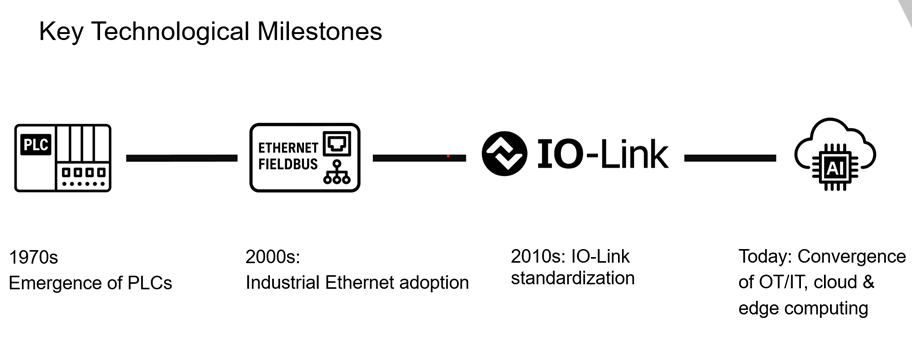 As manufacturing needs grew, relying on one central control system started to slow things down. To keep up, engineers moved some controls closer to the machines. This made things more flexible and helped catch issues faster. But it still had its limitations.
Today’s technology has taken a big leap forward. Modern manufacturing systems allow each device on the floor, like sensors and actuators, to handle some processing on its own. These smart components can send and receive detailed information in real time, making the entire system faster, more agile, and responsive.
Why IO-Link matters
One of the technologies helping this change is IO-Link. It’s a communication system that lets devices talk to each other in smarter, more detailed ways. Instead of just sending basic on/off signals, devices can now share things like their current settings or even whether they’re working properly.
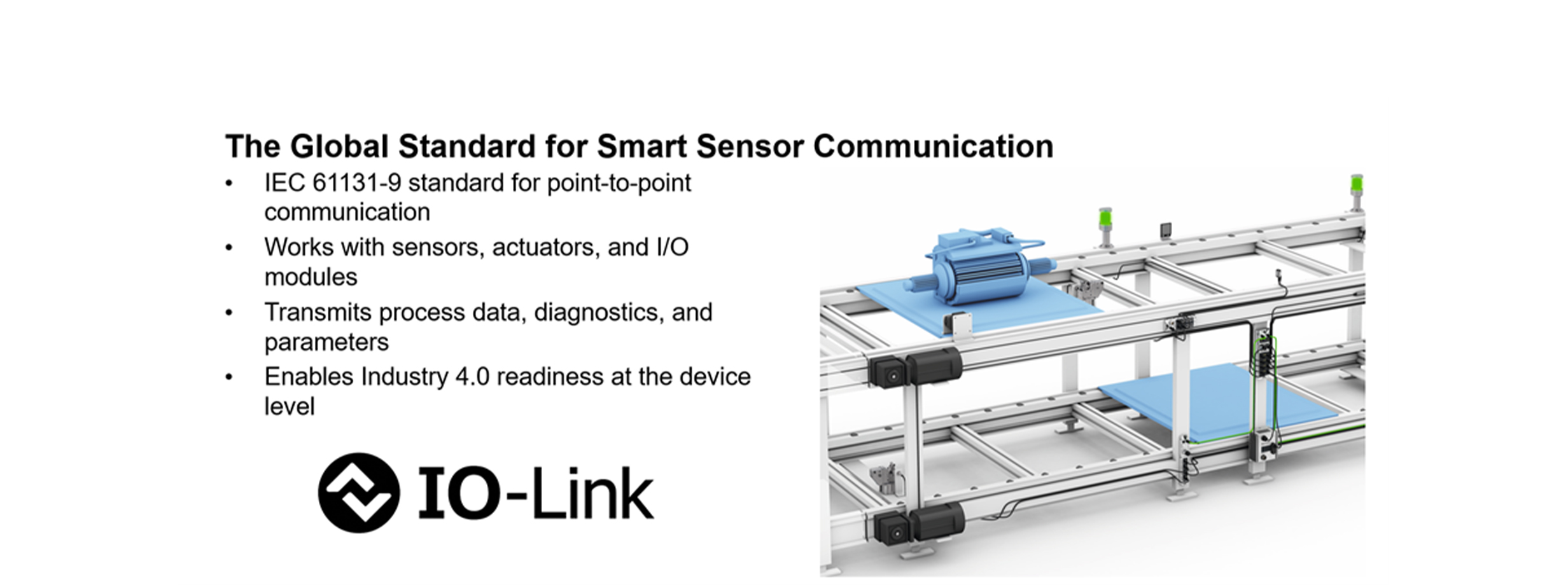 So, what does this actually look like on the floor? Say you need to swap out a sensor. With IO-Link, the system automatically recognizes the new device and knows how it supports its function. There’s no need to reconfigure anything manually. It just plugs in and runs, saving time and avoiding errors.
It also makes life easier for maintenance teams by helping them spot issues early, sometimes before anything even goes wrong. That keeps production lines running and reduces stress for everyone involved.
Predictive maintenance: fixing problems before they happen
One of the most exciting benefits of today’s systems is predictive maintenance. Instead of waiting for a breakdown or guessing a machine might need attention, factories can now monitor equipment health as it runs, making it easier to fix issues before they turn into problems.
Sensors track things like temperature, vibration, and how often a part is used. When patterns suggest that something might go wrong soon, the system sends an alert. That way, teams can step in early, fix the issue, and avoid surprise breakdowns or costly repairs.
The bigger picture
Modern automation isn’t just about machines. It’s about connecting the whole team. Operators, engineers, IT staff, and decision-makers all get access to the data they need to work smart and faster.
With this kind of setup, factories can:
Respond quickly to changes in demand
Improve product quality
Save energy and reduce waste
Make better decisions with real-time data
It’s not just about efficiency. It’s about giving businesses the tools to thrive.
Automation architecture may sound like something only engineers care about, but =it affects every part of the operation. Whether you’re running a production line or making big strategic business decisions, how your factory is connected plays a critical role.
Embracing technologies like IO-Link and shifting toward smarter, more distributed systems is a key in getting ready for what’s next.
The future of manufacturing isn’t down the road; it’s already here. And today’s leading factories are more intelligent, faster, and more adaptable than ever.

Comment
Popular posts
An easy way to remember PNP and NPN sensor wiring
Real-time speed of IO-Link wired
Advantages of inductive proximity sensors in industry
Automation for intralogistics: a practical perspective
Contact form
Do you have any questions or suggestions? We are at your disposal.
Balluff GmbH
-
Zabergäustraße 8
73765 Neuhausen a.d.F.