

Faster Format Changes with IO-Link, RFID and Digital Position Indicators
Up to 30% shorter changeover times with fewer setup errors
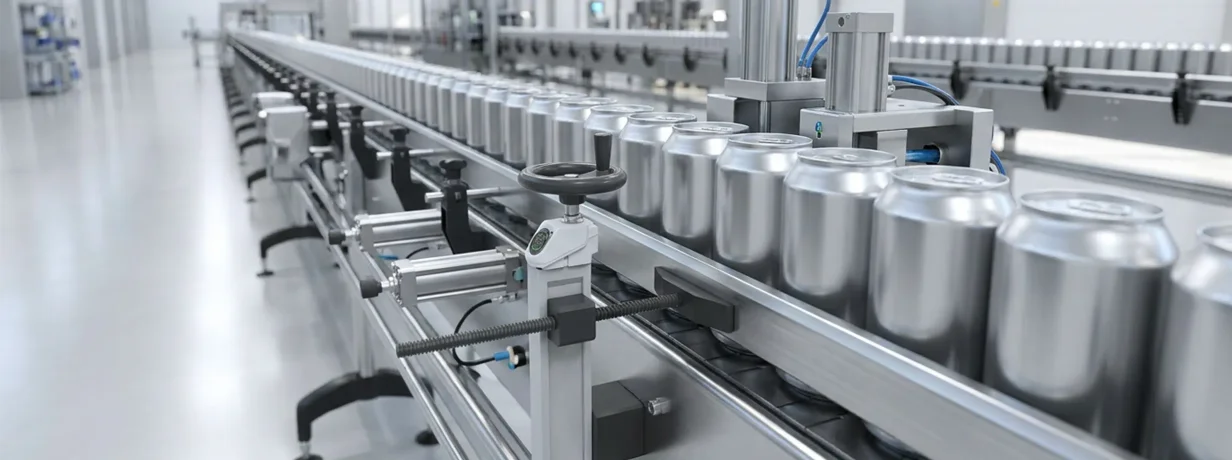
Industry: Packaging | Customer: Global Leader in Food Manufacturing
A global leader in food manufacturing was looking for ways to improve production efficiency and increase machine availability. After evaluating different approaches, the company implemented a combination of Balluff RFID, SmartLight and IO-Link technologies on a coffee can labeling machine to support faster and more reliable format changes.
Situation
The machine handles five different can sizes ranging from the smallest at 400 g to the largest at 1700 g. The substantial size variations make changing formats challenging, especially when moving between the smaller and larger can sizes.
This particular production line has a high commercial demand and requires operating 24 hours a day. The machine with its twelve change points had become a bottleneck during changeover process, making it vital to reduce downtime in order to produce the required demand.
Challenge
The main challenge was to reduce format change downtime and improve ramp up of the production line after a completion of changeover. Every minute that is saved here can be used for more valuable production. It was also important to reduce training requirements and the need for experienced personnel. Good and skilled people are hard to find and also more expensive.
The overall challenge was to increase productivity and profitability of this production line to produce more goods for less money.
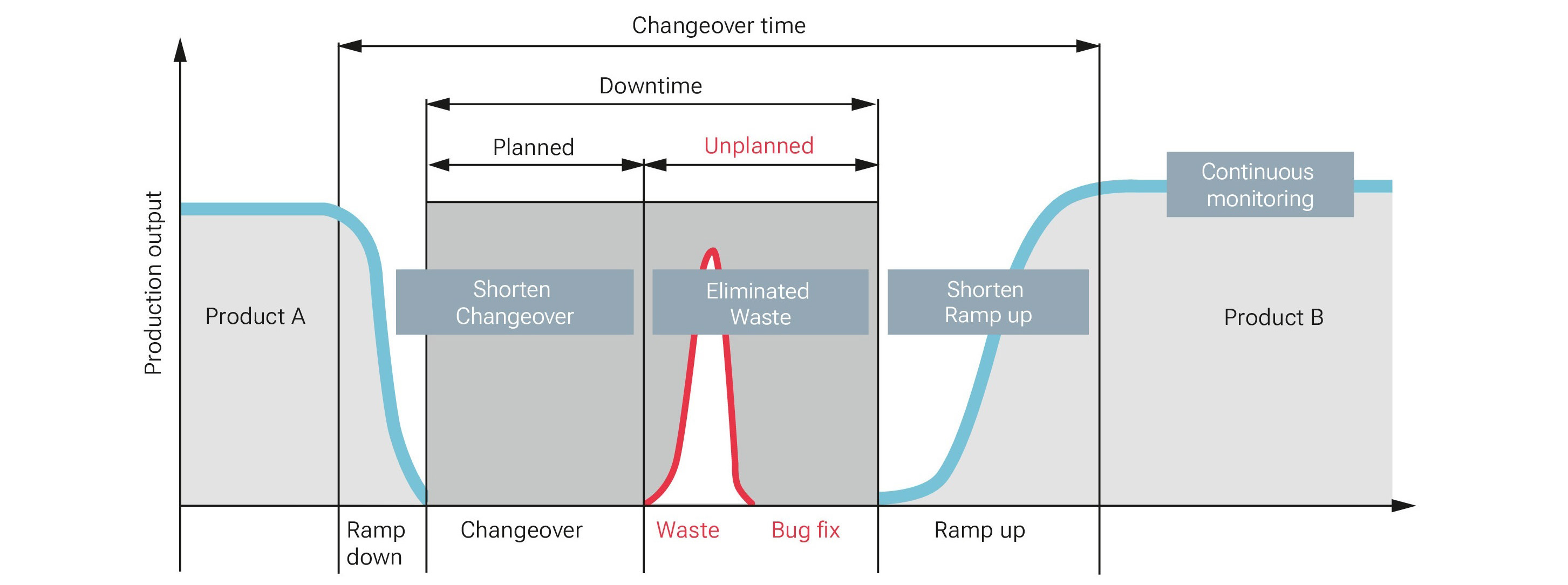
Balluff Technology in Action
To optimize the process, the customer implemented a combination of Balluff RFID, digital positioning indicators, SmartLights, and IO-Link-enabled devices.
RFID automatically identified the correct format parts and tooling before production started, helping ensure the correct setup for the selected can format. Balluff digital position indicators and SmartLights provided clear visual guidance at each adjustment point, leading operators through the changeover process step by step. IO-Link enabled transparent communication between sensors, actuators, and machine controls, ensuring that adjustment statuses were clearly visible throughout the machine.
Results
The impact was immediate:
-
Up to 30% shorter changeover times through improved setup transparency and faster machine adjustment verification.
-
Approximately 50% reduction in setup-related errors thanks to RFID-based format verification.
-
Up to 25% lower operator training effort thanks to intuitive visual status indication and simplified setup validation with digital position indicators and SmartLights.
-
Improved product quality and process consistency through verified machine settings and real-time feedback from IO-Link devices.
-
Increased machine availability and higher overall equipment effectiveness (OEE).
Customer Benefit
What was once a complex and experience-dependent task became a repeatable and highly reliable process. Operators can now complete format changes faster and with greater confidence, while production teams benefit from fewer errors, consistent quality, and reduced downtime.
By combining RFID for format identification, digital position indicators for precise machine setup, SmartLights for clear machine status visualization, and IO-Link for seamless communication and diagnostics, the customer achieved shorter changeovers, fewer setup errors and improved machine availability on the can labeling machine.
Note: The percentages shown represent typical customer benefits achieved in packaging changeover applications and are illustrative rather than measured values from a specific installation.
Products
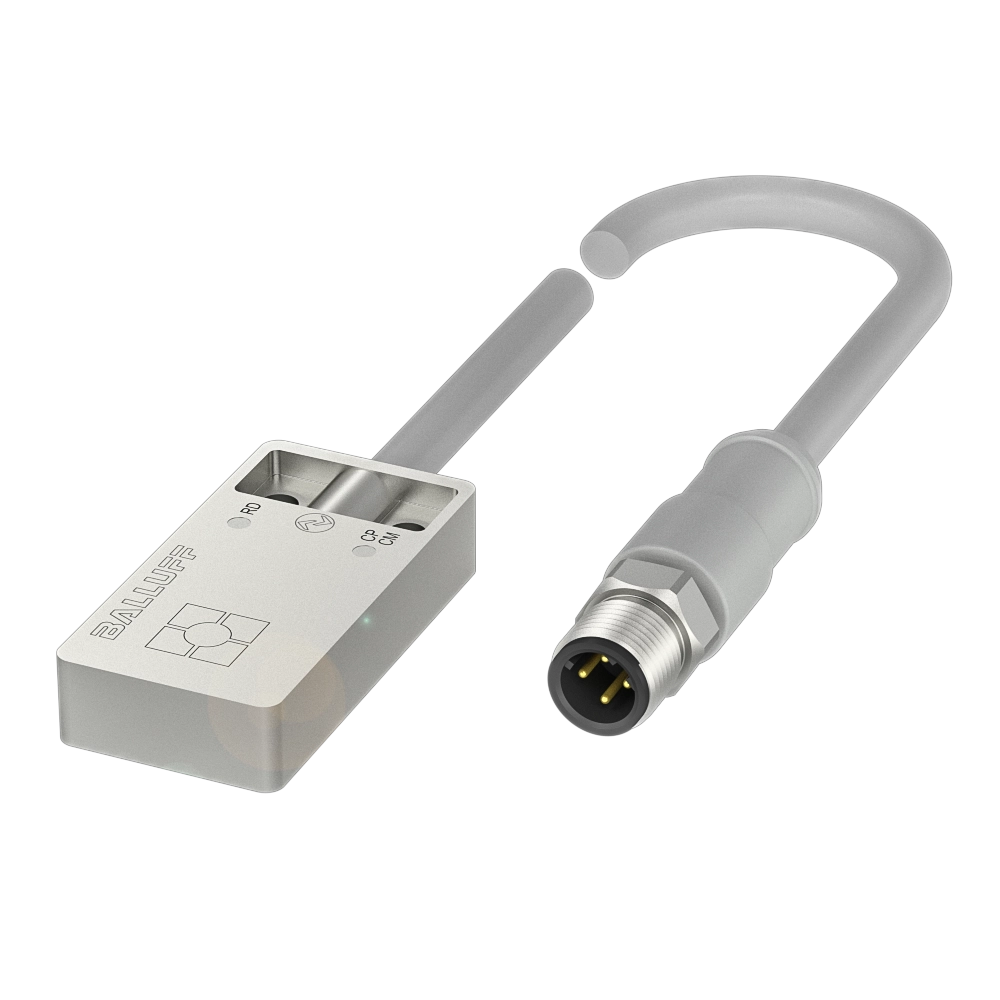
HF RFID readers (13.56 MHz)
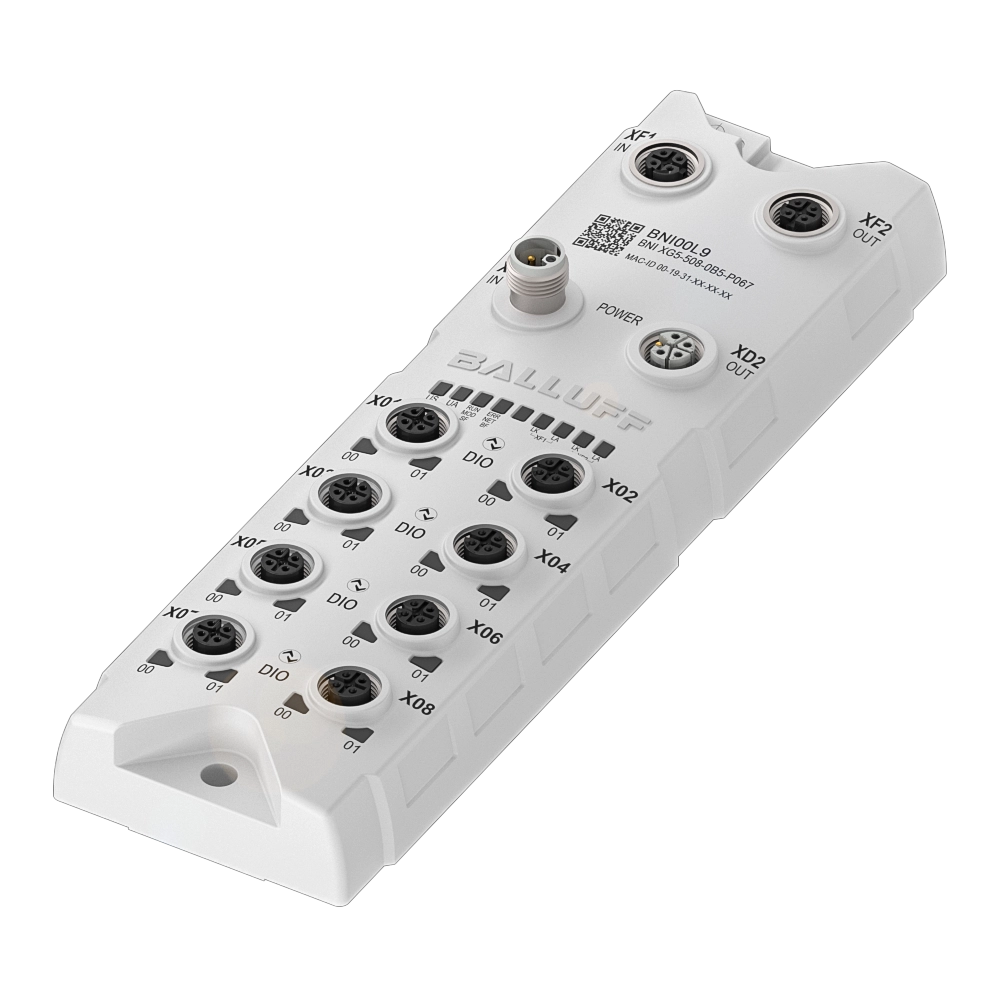
IO-Link Master
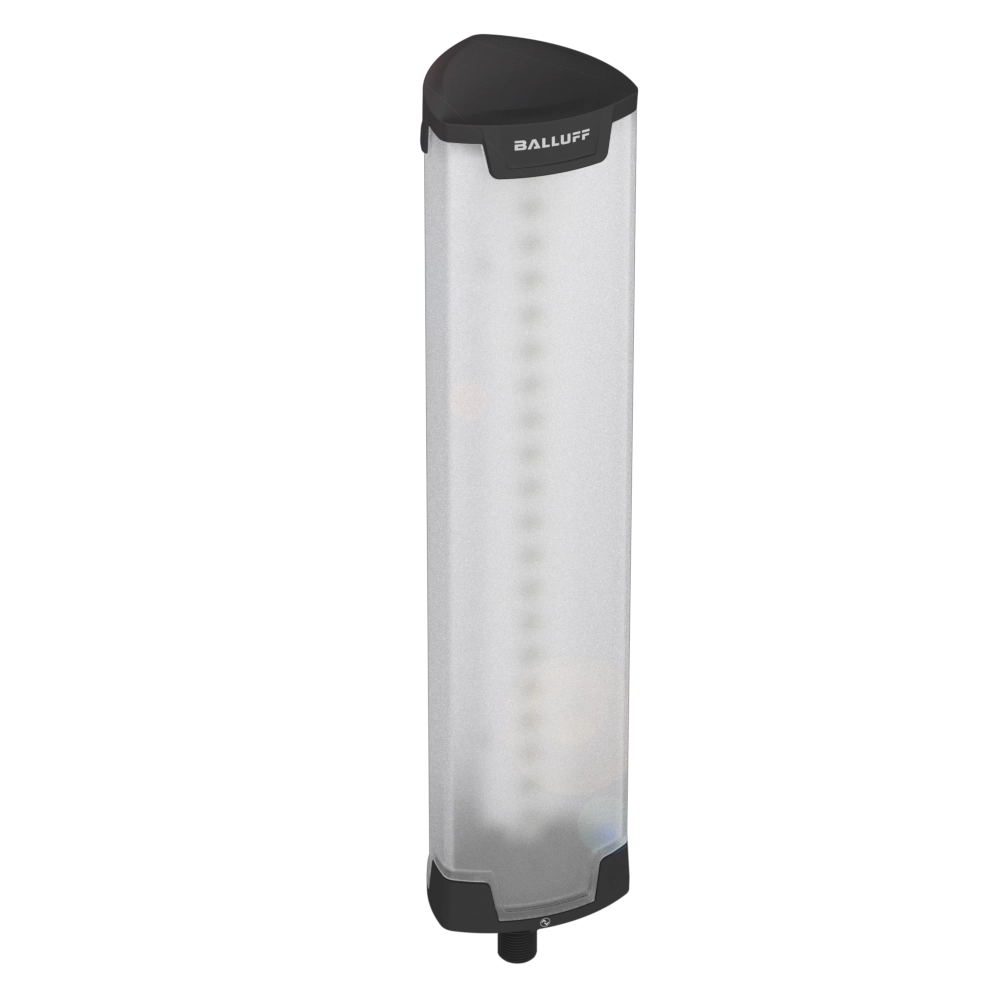
SmartLight – LED stack lights
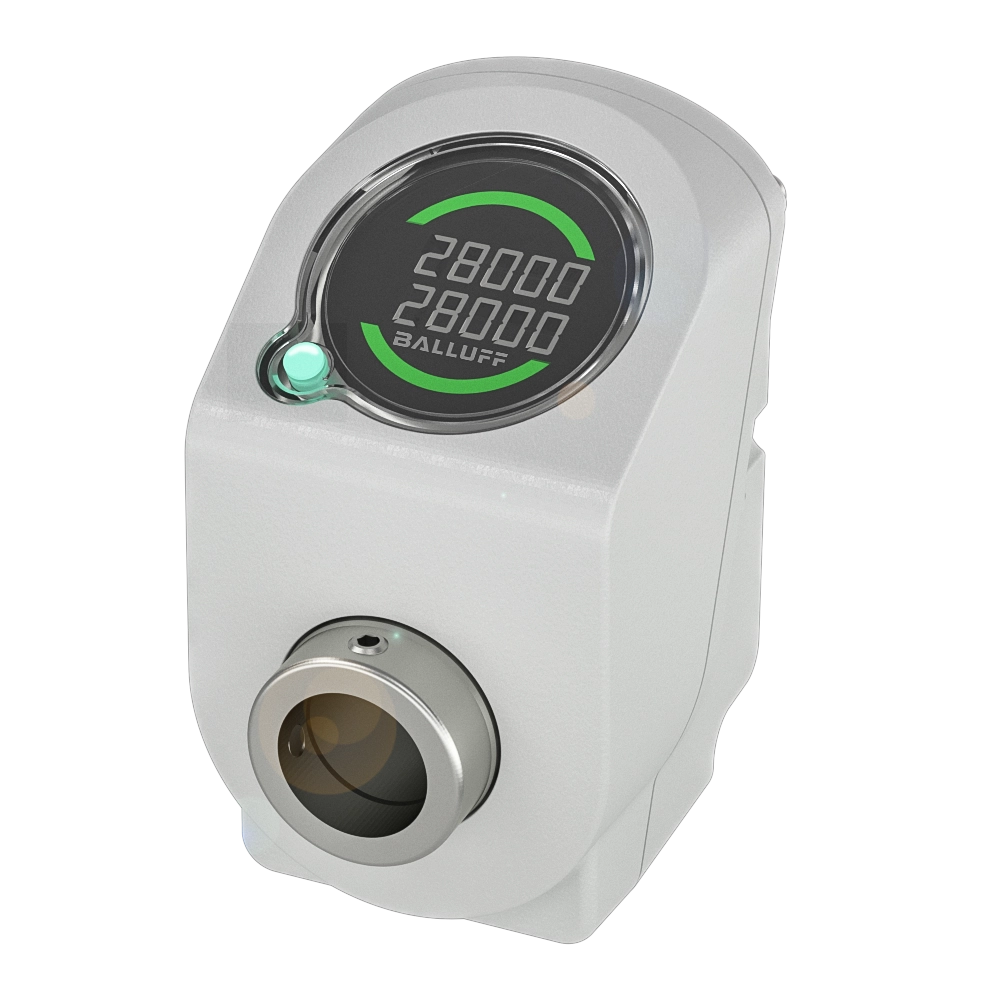
Digital position indicators
HF RFID readers (13.56 MHz)
- Product group
- HF (13.56 MHz)
- Dimension
- 25 x 10 x 50 mm
- Installation
-
metal-free (clear zone)
on metal
flush in metal - Antenna type
- round
- Supported data carrier types
-
DIN ISO 15693
DIN ISO 15693 (High Memory) - Connection
- Connector, M12x1-Male, 4-pin
- Housing material
- ABS, ABS-GF16
- Ambient temperature
- 0...70 °C
- IP rating
-
IP68
IP69K - Interface
- IO-Link 1.1
- Approval/Conformity
-
CE
UKCA
FCC Part 15
IC (Radio)
WEEE
Ecolab
cULus
MIC
IO-Link Master
- Special characteristics
- Washdown
- Interface
- Profinet / EtherNet/IP / EtherCAT / Modbus TCP
- Interface IIoT
-
REST API, MQTT parsed
OPC UA - Auxiliary interfaces
- 8x IO-Link
- Port-class
- Type A
- Output current max.
- 4 A
- Display
- no
- Operating voltage Ub
- 18...30 VDC
- Connection (COM 1)
- M12x1-Female, 4-pin, D-coded
- Connection (COM 2)
- M12x1-Female, 4-pin, D-coded
- Connection (supply voltage IN)
- M12x1-Male, 5-pin, L-coded
- Connection (supply voltage OUT)
- M12x1-Female, 5-pin, L-coded
- Connection slots
- 8x M12x1-Female, 5-pin, A-coded
- Digital inputs
- 16x PNP, Type 3
- Digital outputs
- 16x PNP
- Configurable inputs/outputs
- yes
- Current sum US, sensor
- 16 A
- Current sum UA, actuator
- 16 A
- Housing material
-
Plastic
Stainless steel, Inserts - Dimension
- 68 x 38.3 x 226.2 mm
- Ambient temperature
- -40...70 °C
- IP rating
-
IP68
IP69K - IO-Link version
- 1.1.4
- Safety Hub Support
- yes
- Not incl. in scope of delivery
-
Label plates
Port cover
SmartLight – LED stack lights
- Principle of operation
- Indicator light with sound module and StrobeLight
- Interface
- IO-Link 1.1
- Operating voltage Ub
- 18...30.2 VDC
- Connection
- M12x1-Male, 5-pin
- Segments, number max.
- 6
- Predefined colors
-
Red
Green
Yellow
Blue
Magenta
Cyan
White
Orange
configurable - Function indicator
-
Segment
Fill level
Runlight
Flexible
Ultimate - Volume (at a distance of 1m)
- 95 dB
- Setting
-
Display
Strobe light
Volume - Additional function
- Extended mode
- Dimension
- 60.6 x 60.6 x 303.9 mm
- Housing material
-
PC, Transparent
PBT GF30 - Mounting part
- Nut M18x1
- Ambient temperature
- -25...50 °C
- IP rating
- IP65
- Transfer rate
- COM3 (230.4 kBaud)
- Process data cycle min.
- 5 ms
- Process data IN
- 1 byte
- Process data OUT
- 24 bytes
Digital position indicators
- Display
-
Digital display
12 characters - Shaft type
- Hollow shaft
- Shaft diameter
- 20 mm
- Resolution rotary
- 14000 ppr
- Repeat accuracy
- ± 1 Inkrement
- Non-linearity max.
- ±1°
- Connection
- M12x1-Male, 4-pin
- Speed max.
- 600 1/min
- Interface
- IO-Link 1.1
- Housing material
- PA 12
- IP rating
- IP69K, IP68
- Approval/Conformity
-
CE
UKCA
cULus
Ecolab
WEEE - Secondary features
-
Identification
Device Discovery
Measurement Profiles
Signal Delay
Switching Counter
Basic Statistics
Logic Blocks
Operating Hours Counter
Boot Cycle Counter
Voltage and Current Monitoring
Extreme Environment Status
Storage Usage Monitoring
Variant Configuration
Pin Assignment - Secondary features for condition monitoring
-
Vibration monitoring
Inclination monitoring and installation aid
Internal temperature monitoring
Internal humidity detection