

Temperature sensors for industrial applications
Reliable temperature monitoring of liquid and gaseous process media
Balluff temperature sensors enable reliable temperature monitoring of liquid and gaseous media directly in the process. They help maintain defined temperature ranges in machines, systems, and fluid circuits and reliably monitor critical temperature changes. By detecting temperature deviations at an early stage, they safeguard product quality, protect critical equipment, and increase process reliability. For example, they can stabilize the viscosity of hydraulic oil, monitor the cooling effect of cooling lubricants, and prevent thermally induced process disruptions.
Depending on the measurement task, temperature sensors with displays, temperature transmitters, and compact Pt1000 temperature probes are available. Different measuring ranges, installation lengths, and process connections enable integration into a wide variety of industrial applications.
Our temperature sensor portfolio
Our portfolio includes contact temperature sensors with displays, compact temperature transmitters, and Pt1000 temperature probes for different display, signal transmission, and external evaluation requirements.
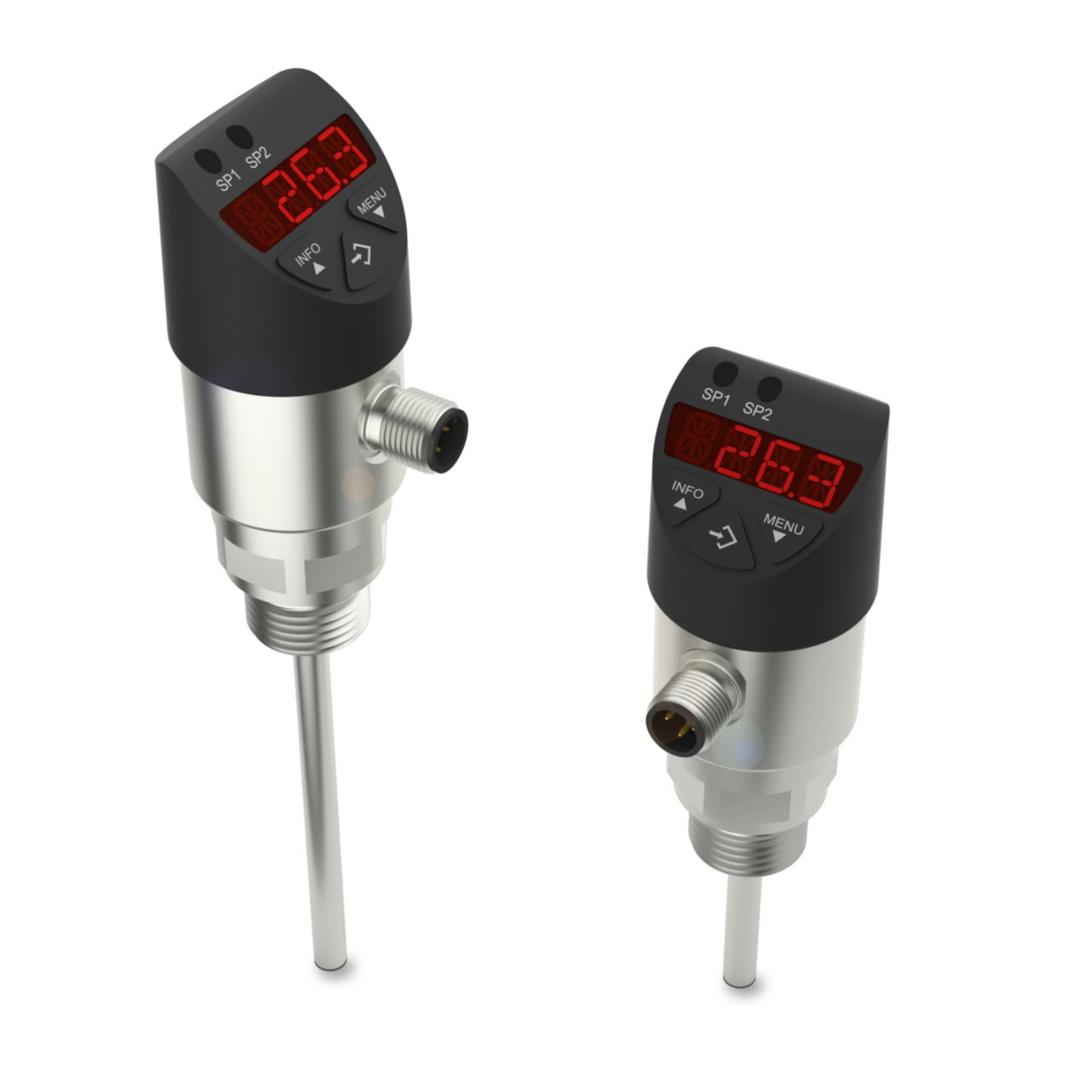
Contact temperature sensors with display
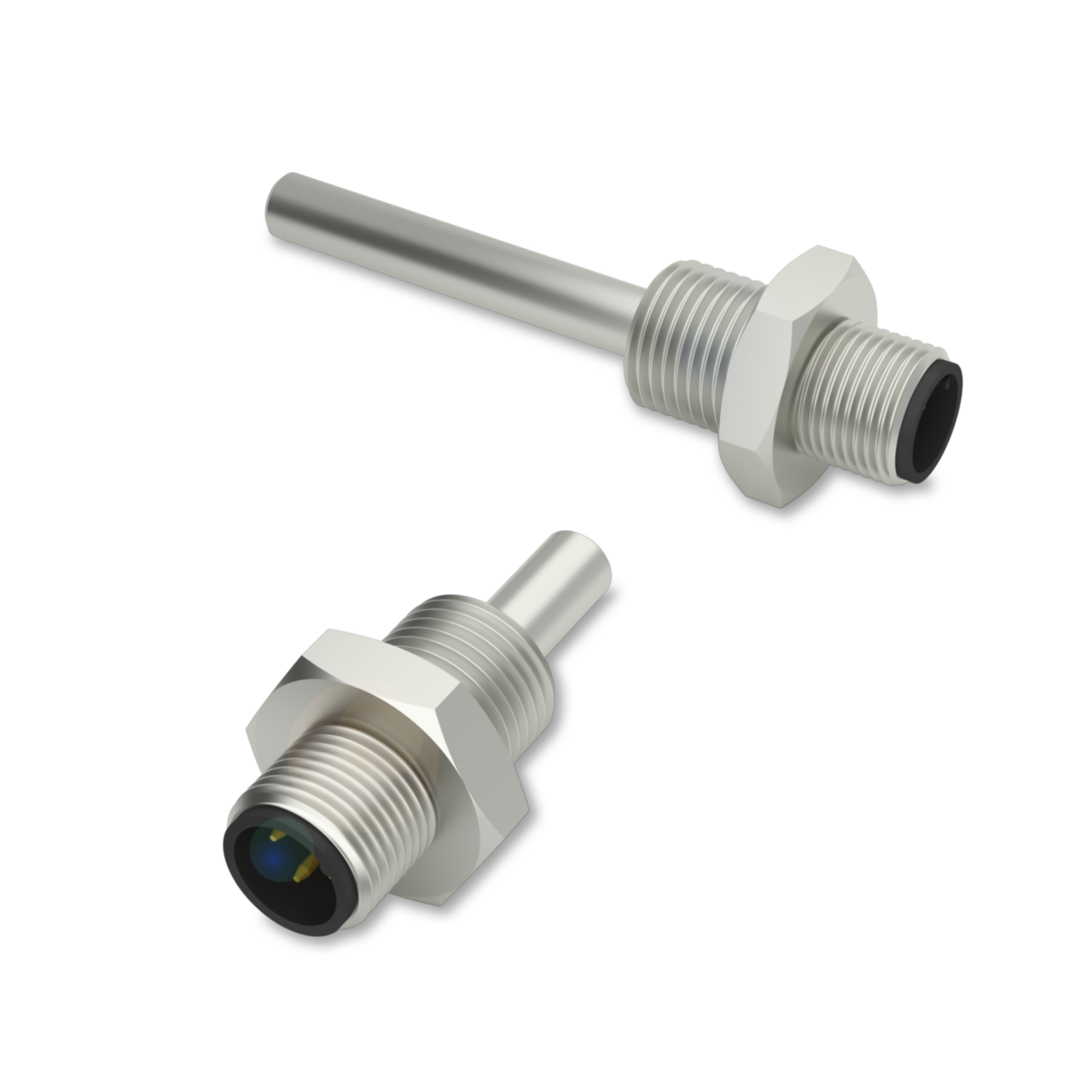
Temperature sensors
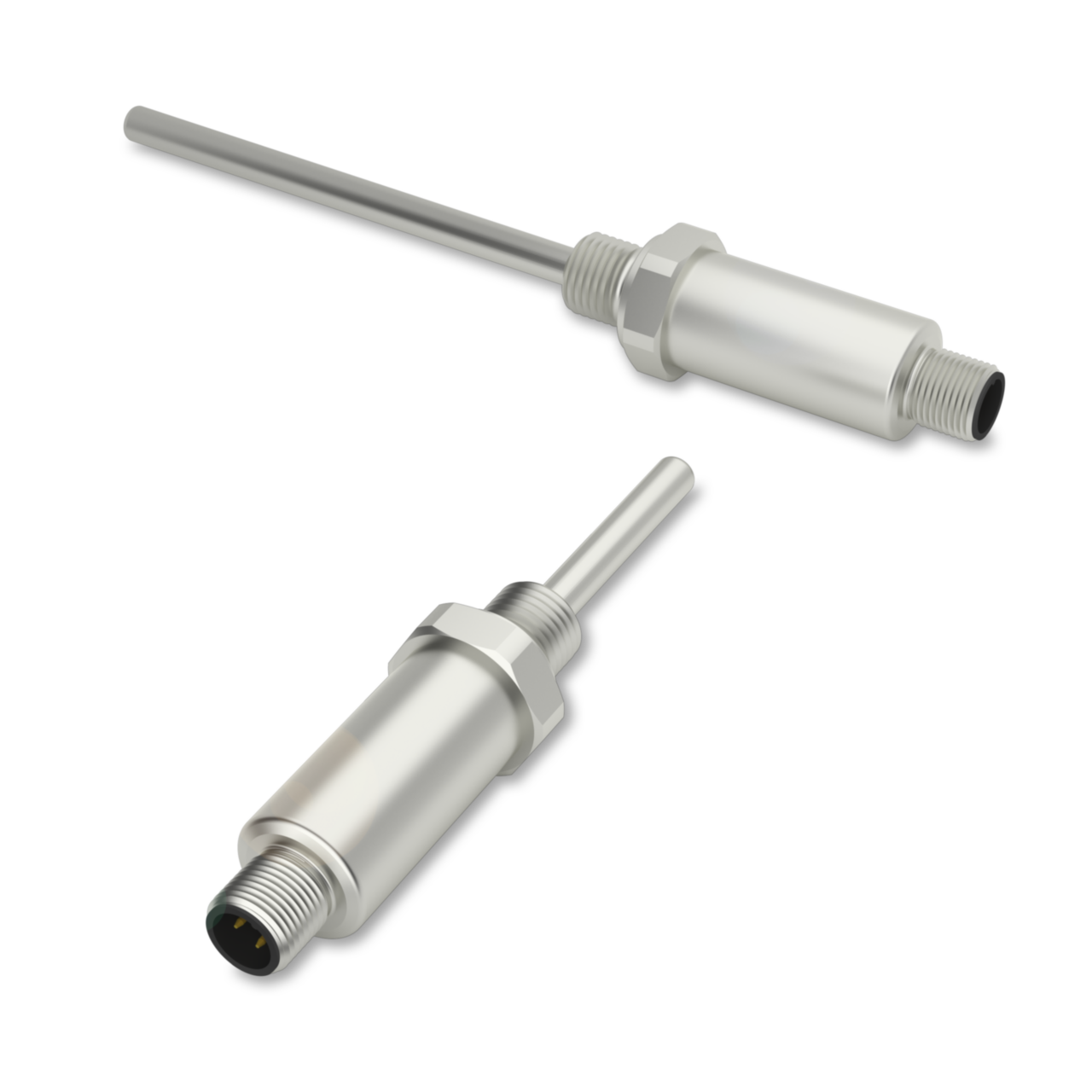
Temperature transmitters
Process stability through reliable temperature monitoring
The temperature of a process medium affects numerous physical and technical properties. In hydraulic oils and lubricants, for example, it affects viscosity. In cooling circuits, the temperature provides information about the available cooling capacity. Unacceptable temperature changes can also indicate malfunctions, overload, increased friction, or changed process conditions.
Continuous or limit-based temperature monitoring enables deviations to be detected at an early stage and appropriate machine responses to be initiated. This supports stable processes, protects machine components, and provides a reliable data basis for maintenance and condition monitoring.

Measure temperatures reliably. Keep processes stable.
Detect temperature deviations at an early stage

Safeguard process stability and product quality

Flexible integration through various process connections

Support condition monitoring and maintenance

Typical applications of temperature sensors in industrial processes
Temperature sensors monitor the thermal state of liquid and gaseous media directly in the process. Typical applications include machine tools, hydraulic systems, and cooling and lubrication circuits. Depending on the sensor version, the temperature can be measured continuously or monitored using defined limit values. This allows temperature deviations to be detected at an early stage and helps maintain stable operating conditions.
Monitoring temperatures in cooling and lubrication circuits
Task: Reliably monitor heat dissipation and media supply
In cooling and lubrication circuits, the medium temperature is an important condition and process variable. Rising or falling temperatures can indicate changed operating conditions, insufficient heat dissipation, or changes within the media circuit.
Temperature sensors monitor cooling water, cooling lubricants, or lubricants directly in pipes, containers, or tanks, for example. This allows temperature deviations to be detected at an early stage and evaluated together with other measured variables such as flow, pressure, and level.
In this way, temperature measurement also supports condition monitoring of pumps, bearings, motors, and drives.
Monitoring coolant temperature for precise machining processes
Task: Ensure thermally stable conditions in the machining process
During metalworking, coolants and cooling lubricants absorb heat from the machining process. If their temperature changes, the cooling conditions may also change, affecting the thermal load on the tool, workpiece, and machine components.
Temperature sensors measure the medium temperature directly in the cooling circuit. This allows deviations from the intended temperature range to be detected at an early stage. Temperature monitoring supports stable cooling conditions and helps prevent excessive thermal loads during machining.
Maintaining hydraulic oil at the correct operating temperature
Task: Support viscosity and reliable operation of the hydraulic system
The temperature of hydraulic oil affects its viscosity. Temperatures that are too low or too high can alter the oil's flow characteristics and lubricating effect, thereby affecting the operating behavior of the hydraulic system.
Temperature sensors measure the oil temperature directly in the hydraulic power unit, tank, or associated fluid circuit. This allows deviations from the intended temperature range to be detected at an early stage and taken into account in system control or maintenance. Monitoring the oil temperature therefore supports suitable viscosity and reliable operation of the hydraulic system.
Do you need support or have specific requirements?
We will be happy to help you select the right sensors.Contact temperature sensor, temperature transmitter, or temperature probe?
The specific device selection depends on whether the measured value is to be displayed directly, transmitted as a standardized signal, or evaluated externally as a passive resistance signal. In addition to the required signal type, the medium, temperature range, process pressure, and installation situation are crucial. The following criteria should be considered to ensure reliable measurement.
|
Contact Temperature Sensor with Display |
Temperature Transmitter |
Temperature Probe |
|
|
Display at the Measurement Point |
Yes |
No |
No |
|
Signal Output |
Switching and/or analog signal, depending on the model |
4…20 mA analog signal |
Pt1000 resistance signal |
|
Signal Processing |
Directly in the sensor |
Directly in the transmitter |
Externally via a suitable evaluation unit |
|
Particularly suitable when … |
the measured value needs to be visible on-site or a limit value needs to be monitored directly |
a standardized signal is required for continuous process monitoring |
a suitable Pt1000 evaluation unit is available |
Selecting the right temperature sensor
When selecting the appropriate sensor, the medium, process conditions, and installation situation are just as important as the measurement task. These six criteria will help you make the technical selection:

PROCESS MEDIUM - Check medium and material compatibility
Which medium is being monitored? Water, cooling water, cooling lubricant, hydraulic oil, lubricant, or a gaseous medium each place different requirements on the sensor. The materials used for the probe, process connection, and seal must be resistant to the medium in use.

MEASUREMENT TASK - Measured value, display, or limit value
What temperature information is required? The key consideration is whether the temperature is to be measured continuously, displayed directly at the measuring point, or monitored using defined limit values. The measurement task determines whether a contact temperature sensor with a display, a temperature transmitter, or a Pt1000 temperature probe is suitable.

TEMPERATURE RANGE - Select the appropriate measuring range
What minimum and maximum temperatures occur in the process? The sensor's measuring range must correspond to the expected process temperatures. The permissible ambient temperature must also be considered, particularly for versions with integrated electronics and a display.

PROCESS CONDITIONS - Consider operating limits
Under what conditions will the temperature sensor be used? Process pressure, ambient temperature, and degree of protection must remain within the specified operating limits. Mechanical loads, vibrations, and possible cleaning processes must also be considered when selecting the sensor version.

INSTALLATION SITUATION - Check measuring point and immersion depth
How will the sensor be installed in the process? The process connection, installation length, pipe diameter, installation position, and available installation space must be compatible with the existing system. The probe tip should be immersed sufficiently far into the medium and remain surrounded by it. Insufficient immersion depth can impair heat transfer and cause the measured value to be affected by the temperature of the pipe wall or process connection.

OUTPUT AND COMMUNICATION - Select the appropriate signal output
What information does the controller require? Resistance, analog, or switching signals are available depending on the measurement and automation task.
Temperature sensors as part of the Balluff process sensor portfolio
The Balluff fluid sensor portfolio includes sensor solutions for the key measured variables of flow, pressure, temperature, and level. In addition to temperature sensors, Balluff offers pressure sensors, flow sensors, and various solutions for level measurement. This allows different process variables to be measured and monitored using coordinated sensor solutions from Balluff.
Frequently asked questions about temperature sensors and temperature monitoring
-
Which media can be monitored with the temperature sensors?
Depending on the version, temperature sensors that come into contact with the medium are suitable for liquid and gaseous process media, such as water, cooling water, cooling lubricants, hydraulic oil, lubricants, or compressed air. Before selection, the material compatibility and permissible temperature and pressure ranges of the respective sensor version must be checked.
-
What should be considered for compressed air and other gaseous media?
The temperature of gaseous media such as compressed air can also be measured using suitable temperature sensors that come into contact with the medium. Since heat transfer in gases differs from that in liquids, flow velocity, installation position, and response time can have a greater influence on the measurement. In addition, the process pressure, temperature range, and material compatibility must be suitable for the application.
-
How quickly does a temperature sensor respond to temperature changes?
The response time does not depend solely on the measuring element. The probe diameter, installation length, immersion depth, medium, and flow velocity also affect how quickly the sensor responds to a temperature change. For applications involving rapid temperature changes, the response time of the specific sensor version should therefore be checked.
-
How are the installation position and installation length of the temperature sensor determined?
The installation position and installation length depend on the pipe diameter, the geometry of the measuring point, and the flow conditions. The probe tip should be immersed sufficiently far into the medium and positioned where it can measure a representative medium temperature. Insufficient immersion depth can cause heat to be dissipated through the pipe wall or process connection and affect the measurement result.
-
What should be considered for media containing particles or contaminants?
For media containing particles or contaminants, the measuring point should be selected to minimize deposits on the probe tip. Deposits can affect heat transfer and therefore the response behavior. The flow conditions, installation position, and possible cleaning measures should therefore be considered during selection and installation.
-
How is material compatibility with the process medium checked?
All materials that come into contact with the medium must be resistant to the process medium in use. This particularly includes the probe tip, process connection, and any seals used. The medium temperature, medium concentration, and possible cleaning processes must also be considered during the assessment. The technical specifications of the respective sensor version are authoritative.
-
What role does process pressure play in the selection?
The temperature sensor must be designed for the maximum process pressure occurring in the application. In addition to the regular operating pressure, possible pressure peaks must also be considered. Since the permissible pressure resistance varies depending on the product family and version, the technical data of the respective sensor must be checked.