

Reduce Vision Application Complexity with Proper Illumination
Put your application in the proper spotlight!
Reading Time: minutes
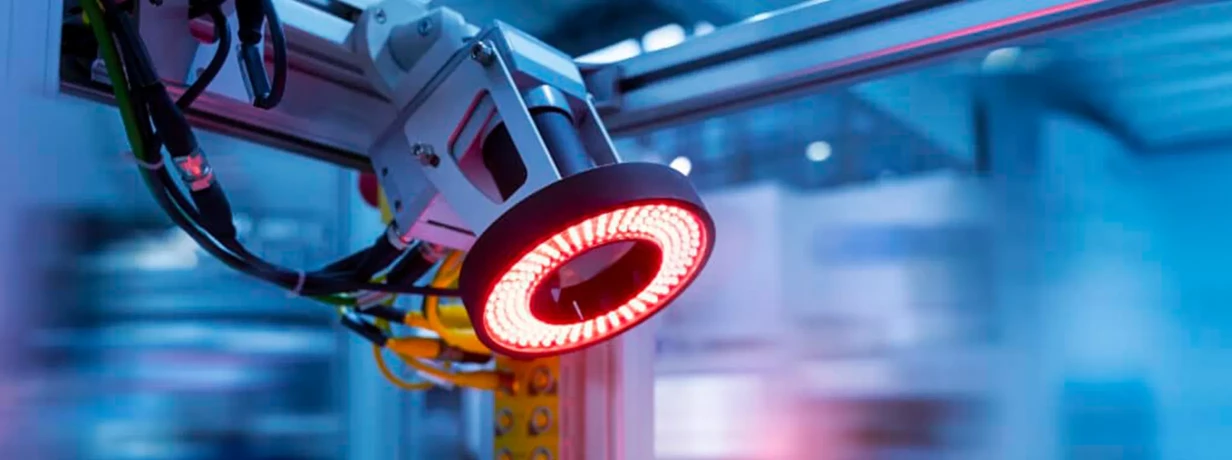
A successful vision application is highly dependent on proper illumination and mounting, accounting for about 60% of the success. Even with advanced AI algorithms, the most basic conditions determine whether a solution costs a few hundred or a few thousand dollars.
The Importance of Lighting
There is no perfect vision system, and neglecting lighting is a common cause of failure, even with the best equipment. Conversely, the most complex applications can sometimes be solved by humble vision sensors simply by taking environmental control seriously. For example, a $2K back-lighting solution successfully detected a misplaced part that over $30K of frontal-illumination systems could not.
The fundamental principle of photography—from the daguerreotype to modern sensors—is the capture of light. The better the lighting, the better your device will capture the Region of Interest (ROI) you want to inspect.
Improving illumination provides several benefits:
Reduces the ROI for inspection.
Optimizes locating tools, reducing processing time.
Requires fewer inspection tools, further reducing application time.
Enhances the contrast of good/bad parts, leading to higher accuracy.
Proper lighting can drastically improve performance, potentially reducing your application's cycle time from 1-2 seconds down to 100 milliseconds.
Goals of Illumination in Vision Applications
When setting up a vision application, you aim to:
Enhance contrast.
Reduce shadows.
Ensure color consistency.
Control natural illumination.
Common Illumination Techniques
Type | Description | Key Use/Benefits | Common Examples |
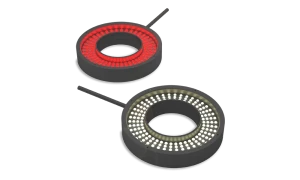
Frontal | Lamp focused onto the object, enhancing contrast through illumination. | General contrast enhancement | Bar, spot, and ring lights |
Darkfield | Light hits the object at a flat angle from the side. | Provides strong contrast on scratches or reliefs | Dark field lights |
Diffuse | Light hits the object in a scattered manner. | Reduces reflections and image burnout; good for polished or reflective surfaces | Dome lights |
Coaxial | Light is directed parallel to the optical axis (using mirror techniques). | Eliminates shadows and highlights surface features; ideal for reading symbols on reflective surfaces | Coaxial lighting systems |
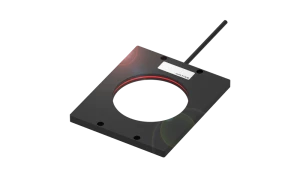
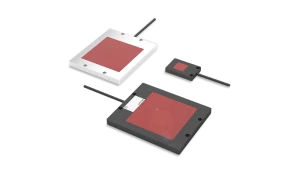
Back Lighting | Object is evenly illuminated from behind. | Creates a strong silhouette/shadow, resulting in enhanced contrast for geometries or transparent objects | Back panel lights |
Mounting and Stability
After ensuring proper illumination, repeatability is crucial. The image must be as steady as possible, as stable conditions lead to better results and easier configuration, even with AI. Additional automation tools and sensors that detect vibrations or misalignments can greatly improve the success of a vision application.
The overall best results depend on your application, but achieving the sharpest image possible allows you to use a lower-spec, more budget-friendly imaging solution.
Keywords
- IO-Link
- Industry 4.0
- Sensor technology
- Robotics
- Industrial automation
- Technology trends
- Smart sensor technology
- Internet of Things
- Condition monitoring
Author

Fernando Reyes Mondragon
Mechatronics engineer and Industry 4.0 specialist, I help businesses unlock value through automation and IIoT strategies. Here, I share practical insights on digitalization and smart manufacturing.
3 Contributions