

Avoid Downtime in Metal Forming With Inductive and Photoelectric Sensors
Precision and uptime, powered by sensors
Reading Time: minutes
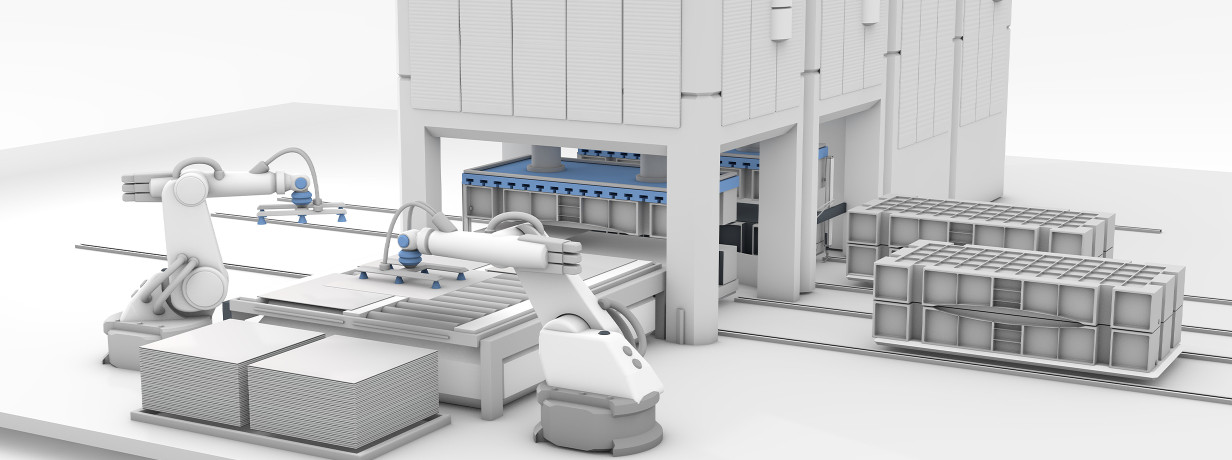
Industrial sensor technology revolutionized how part placement and object detection are performed in metal forming applications. Inductive proximity sensors gained widespread use in the industry in the 1960s as the first non-contact sensors capable of detecting both ferrous and non-ferrous metals. Photoelectric sensors detect objects at greater distances. Used together in a stamping environment, these sensors can reduce the likelihood of missing material or incorrect placement, which can result in a die crash and costly downtime.
Inductive sensors
In an industrial die press, inductive sensors are placed on the bottom and top of the dies to detect the sheet metal for stamping. The small sensing range of inductive sensors enables operators to confirm that the sheet metal is correctly in place and aligned, ensuring that the stamping process creates as little scrap as possible.
 Additionally, installing barrel-style proximity sensors with their sensing face flush with the die structure will confirm the creation of the proper shape. The sensors, positioned at the correct angles within the die, will trigger when the die presses the sheet metal into place. The information these sensors gather within the press effectively makes the process visible to operators. Inductive sensors can also detect the direction of scrap material as it is being removed and the movement of finished products.
Photoelectric sensors
Photoelectric sensors in metal forming have two main functions. The first function is part presence, such as confirming that only a single sheet of metal loads into the die, also known as double-blank detection. This requires placing a distance-sensing photoelectric sensor at the entrance to the die. By measuring the distance to the sheet metal, the sensor can detect the accidental entry of two or more sheets into the press. Running the press with multiple metal sheets can damage the die form and the sensors installed in the die, resulting in expensive downtime while repairing or replacing the damaged parts.
 The second typical function of photoelectric sensors is to verify the movement of the part out of the press. A photoelectric light grid, placed just outside the exit of the press, can confirm the movement of material out before the next sheet enters the press. Additionally, an optical window in place where parts move out will count the parts as they drop into a dunnage bin. These automated verification steps help ensure that stamping processes can move at high speeds with high accuracy.
Conclusion
These examples provide a brief overview of the sensors most commonly used in die presses. The exact sensors are specific to the presses and processes used by different manufacturers, and the technology employed by the stamping industry is constantly evolving as it advances. Similarly, as with all industrial automation, selecting the most suitable sensor ultimately depends on the specific requirements of the individual application.
Keywords
- Inductive sensors
Author

Will Fumich
3 Contributions