

Vision Sensors, Smart Cameras, and Vision Systems: What’s the Difference?
Know the differences—and choose the right vision solution for the job.
Reading Time: minutes
Vision Sensors, Smart Cameras, and Vision Systems: What’s the Difference?
Machine vision plays a key role in modern automation, helping manufacturers inspect parts, verify processes, and maintain quality. But vision terminology can be confusing, especially when terms like vision sensor, smart camera, and vision system are used interchangeably.
While related, these solutions serve different levels of complexity. Understanding the differences helps ensure the right tool is used for the job.
Vision Sensors: Simple Visual Decisions
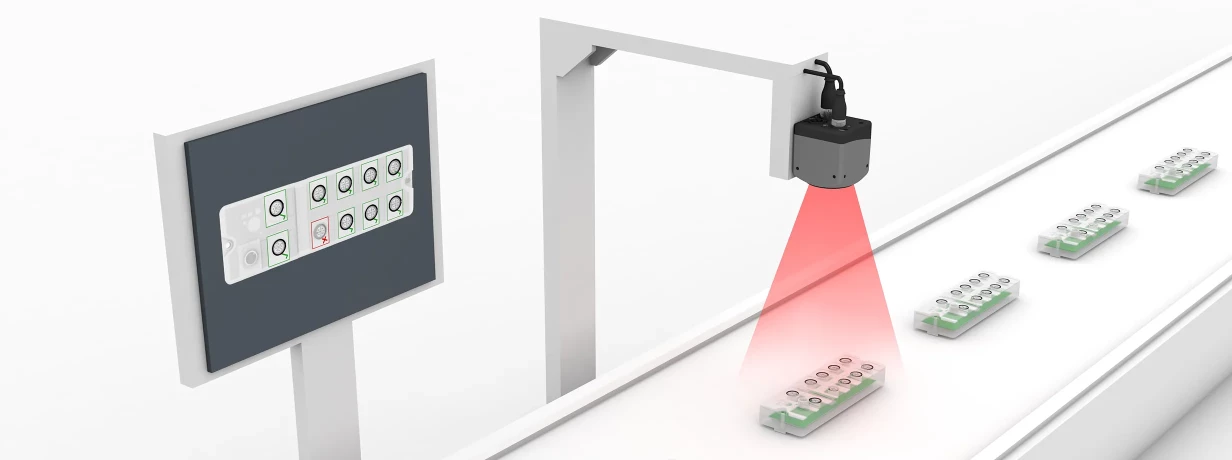
A vision sensor is designed to perform a single, specific visual task. It combines a camera and basic image processing into a compact device, similar in concept to a traditional photoelectric sensor.
Vision sensors are commonly used for:
Presence or absence detection
Basic position verification
Color or contrast checks
1D and 2D code reading
They are easy to set up, require minimal configuration, and typically provide a straightforward pass/fail output.
Best suited for: simple inspections where speed, cost, and ease of use matter
Smart Cameras: More Flexibility in One Device
A smart camera offers more processing power, higher resolutions and inspection capability than a vision sensor, while remaining an all-in-one device. In addition to capturing images, it can run multiple inspection tools and logic functions and often allow for interchangeable lenses and custom lighting solutions.
Smart cameras are often used for:
Pattern matching and multi-point inspections
Basic measurement and gauging
Robotic guidance and picking
Large field of view and/or high-resolution applications
Like vision sensors, they can communicate inspection results and data to PLCs and control systems, making them a flexible option for many automation applications.
Best suited for: applications that require multiple inspections or may change over time.
Vision Systems: Advanced and Highly Customizable
A vision system is the most advanced machine vision option. Instead of a single device, it consists of separate components — such as cameras, lighting, and a vision controller or industrial PC — selected to meet specific application needs.
Vision systems support:
High-resolution or high-speed inspections
Multiple cameras and viewpoints
Advanced algorithms and data processing
Because of their flexibility, they also require more engineering effort to design, integrate, and maintain.
Best suited for: complex inspections where precision, and performance are critical or where muiti-cam views are needed.
Choosing the Right Vision Solution
Each vision option serves a purpose:
Vision sensors simplify basic inspections. No specialized implementation knowledge needed.
Smart cameras much flexibility with a modest hardware and integration cost increase.
Vision systems deliver maximum capability for demanding applications
Selecting the right solution ensures reliable inspection results without unnecessary complexity.
Keywords
- Basics of automation
- Industrial automation
- Technology trends
- Smart sensor technology
- Machine vision
- Intralogistics
Author

Jacob Haas
Jake Haas is a Mechanical Engineering graduate from the University of St. Thomas and a recent graduate of Balluff’s Sales Training & Engagement Program (STEP). He is now the local Sales Engineer for Balluff in Northern Kentucky and West Virginia, supporting customers with industrial automation and sensor solutions.
3 Contributions