

Code Reader vs. Vision Sensor: What’s the difference?
They may look alike, but one is built to decode data and the other is to inspect and evaluate an entire scene.
Reading Time: minutes
If you’ve ever stood on a production floor and wondered whether you’re looking at a code reader or a vision sensor, you’re not alone. They share the same compact housing, same integrated lighting and have that same industrial “camera” look.
But once you’ve worked with both the difference is clear, and choosing the wrong one can create real headaches for traceability and quality.
Let’s break it down in a simple way.
Code Readers: Built to Decode
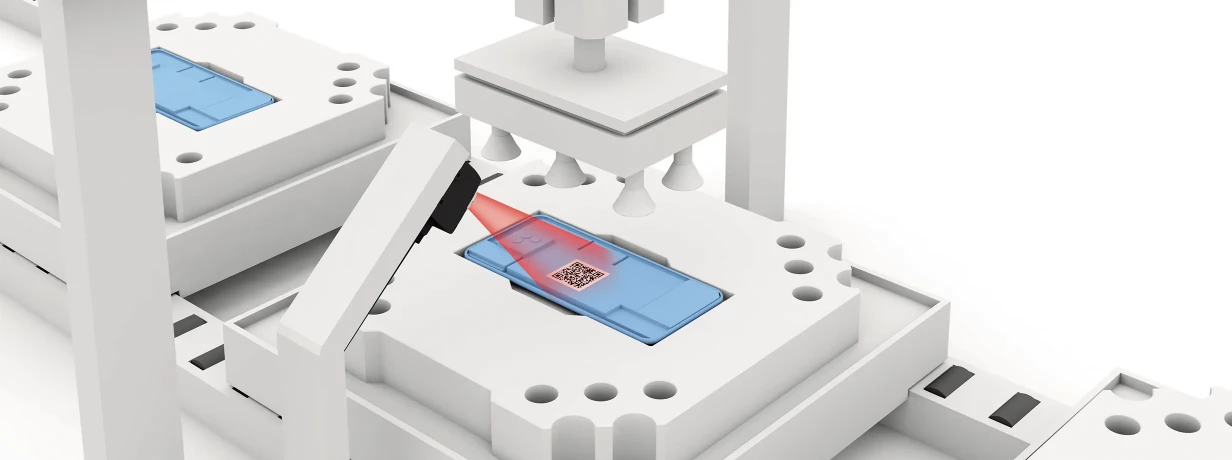
Whenever someone asks me what a code reader actually does, I give the same answer: It finds the code, decodes and sends the data. That’s the entire job. And it’s really good at it.
Code readers are tuned for:
1D and 2D codes
Direct part marks
Streamlined setup and deployment
Code verification
High read rates even on challenging applications
If your need sounds like “we can’t afford missed reads, just decode what’s there” Then a code reader is the right tool for the job.
I rely on them whenever the priority is speed, reliability, simplicity. They’re the dependable workhorse of traceability.
Vision Sensors: Built to Inspect
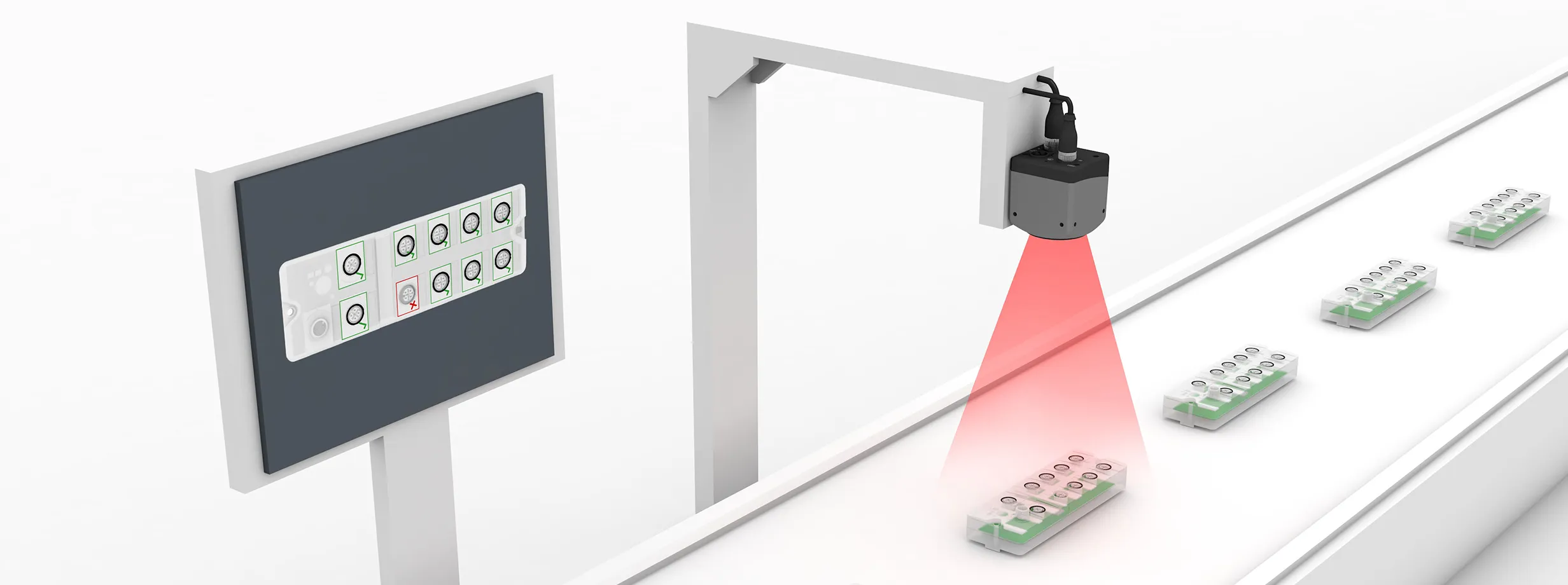 Vision Sensors, on the other hand, take a much broader view. They can read codes too, but that’s just one capability among many.
A Vision sensor doesn’t just read a code. It evaluates an entire scene.
It can:
Confirm a label is present and straight
Spot smudges or damaged print/application
Check part position or orientation
And many more
If you’ve ever asked:
“I want to read the code, but also… is everything correct?” – Then you’re looking for a vision sensor
I think of them as the device you turn to when simple decoding isn’t enough to protect your process.
Why this difference actually matters
In my experience, the real distinction isn’t just about capability, it’s also about project scope and long-term maintainability.
A code reader keeps things tight and predictable. You’re asking it to do one thing, and it does that one thing extremely well. That means:
Less scope creep
Simpler troubleshooting
Cleaner code matching and verification
When something goes wrong, the root cause is usually obvious. And when the system needs to scale, a code reader stays easy to replicate across lines.
A vision sensor opens up more possibilities, but it also can introduce more variables. Lighting, tools, tolerances, image evaluation. All which naturally adds complexity. That’s great when you need inspection but unnecessary if decoding and matching is the only requirement.
That’s why choosing the right device upfront pays dividends later.
Bottom Line
Even though they look similar, a code reader and a vision sensor serve different purposes. One extracts information. One interprets what it sees. Once you understand the difference, it becomes much easier to choose the right tool. And build a more reliable traceability process from end to end.
Keywords
- Industrial network technology
- IO-Link
- Industry 4.0
- Robotics
- Industrial automation
- Technology trends
- Asset tracking
- Message Queue Telemetry Transport (MQTT)
- Internet of Things
- Machine vision
Author

Rob Kline
As product marketing manager for traceability at Balluff, Rob brings over 15 years of experience in factory automation, technical sales, and marketing. He‘s an expert in the fields of RFID and optical code reading. Before joining Balluff, this professional solved traceability problems at key market players in the vision and code reading industry. He brings deep technical knowledge and a wide understanding of industry trends in manufacturing, logistics, packaging, and life sciences.
27 Contributions